Helsinki has over 1,300 km of dedicated cycling paths, a growing network of cycling highways, and a city government that has calculated a return of 3.6 EUR for every euro spent on bike infrastructure. Around 11% of trips in the city are made by bike, with a target of 20% by 2030. If you're thinking about commuting by bike in Helsinki — or already do — here's what you need to know about routes, year-round riding, and keeping your bike safe.
Why Helsinki works for bike commuting
The city is flat. That matters more than anything when you're pedaling to work five days a week. Most of central Helsinki sits close to sea level, and the cycling paths follow a grid that makes cross-city rides straightforward.
The Baana corridor is the flagship route — a 1.3 km cycling highway built in a former railway cutting, running from Kiasma in the city center to Ruoholahti. Around 700,000 cyclists use it each year. Since 2024, it connects through the Kaisantunneli tunnel under Central Railway Station, linking northern and eastern cycling networks to the western waterfront. The planned Baana network will eventually span 140 km, connecting residential areas directly to the center.
Beyond Baana, Helsinki's shoreline routes offer scenic, mostly uninterrupted paths along the coast. They're beginner-friendly and connect major neighborhoods without mixing with heavy car traffic.
For planning, the HSL Journey Planner has a cycling mode that calculates routes and travel times. Google Maps bike layer works too, though the HSL planner knows Helsinki's paths better. The Bike Citizens app is worth trying — it shows cycling radius maps (5, 10, 15, 30 minutes from any point) so you can visualize your commute range.
Year-round cycling: winter doesn't stop Helsinki
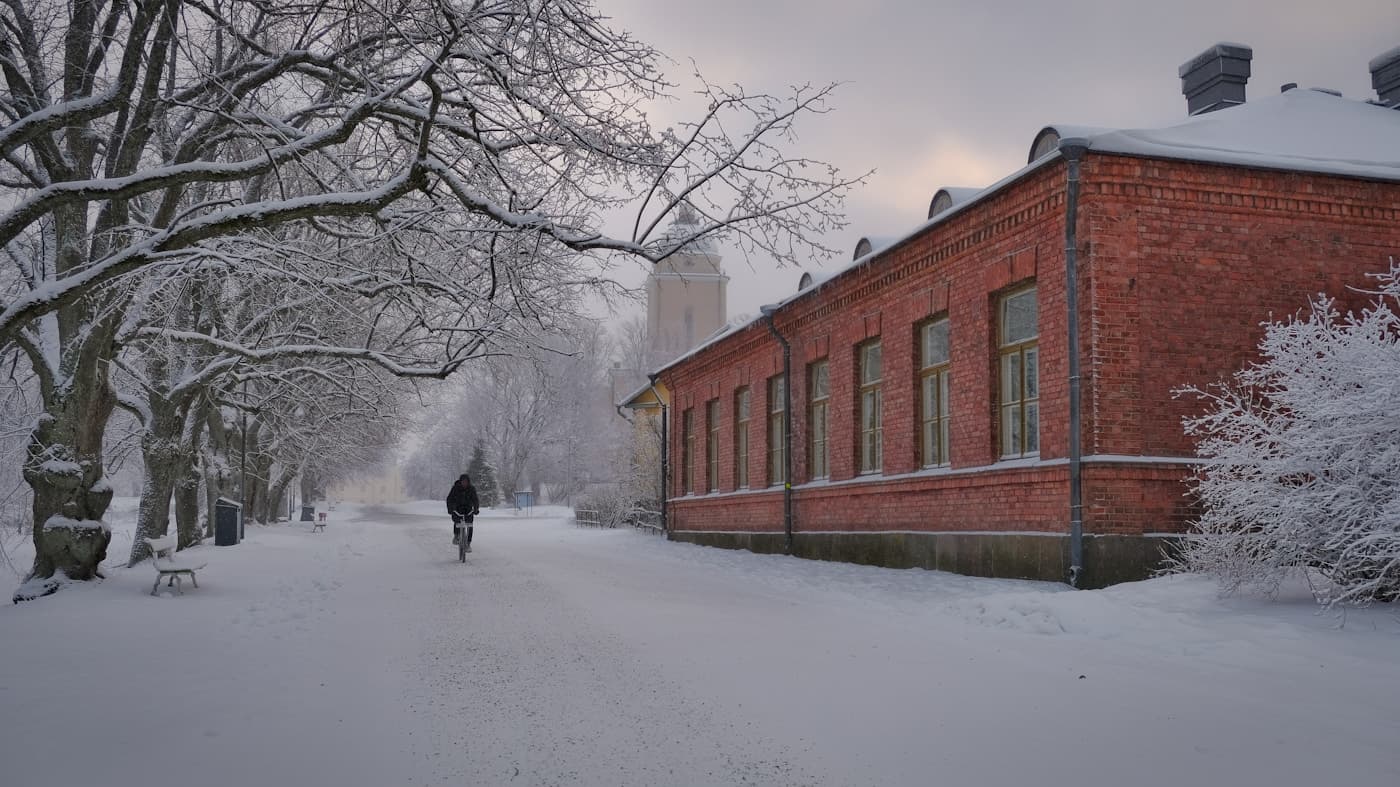
This is what surprises visitors. Helsinki maintains 160 km of priority winter cycling routes with dedicated snow clearance. The network expanded by 20 km for the 2025-2026 winter season. These routes get cleared before most roads.
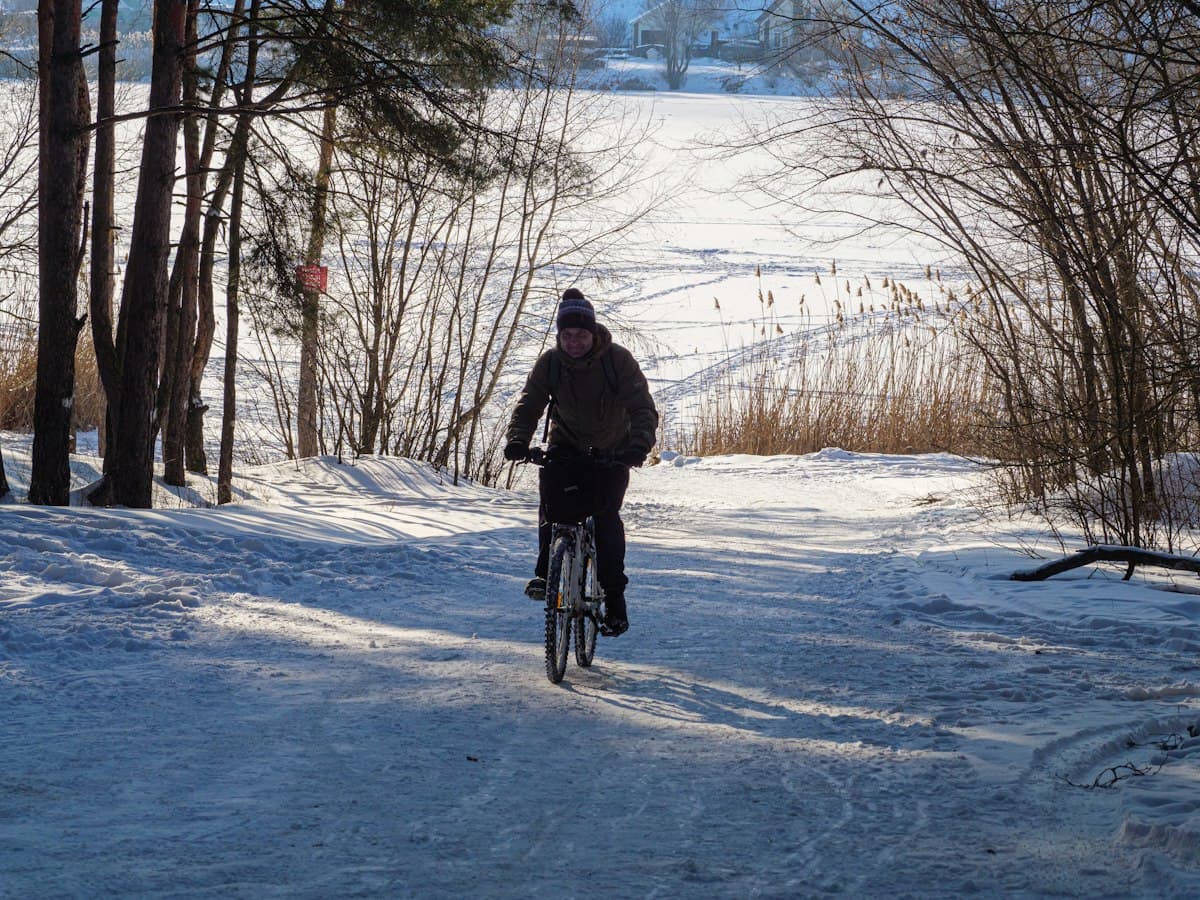
Winter commuting is normal here. Studded tires make the biggest difference — they grip ice reliably and cost EUR 30-60 per tire. Swap them on in November, take them off in April. Beyond tires, the gear is simple: dress as you would for a winter walk. No special cycling-specific clothing needed unless you're doing longer distances.
The city bike system (4,600 bikes across 460 stations) runs seasonally from April to October. But for commuters who ride year-round, owning your bike is the practical choice — and that means securing it properly.
The security problem commuters face
Helsinki averages about 20 bike thefts per day. That's 4,000-5,000 reported thefts per year in the city alone, and the actual number is higher since many go unreported. Nationally, insurance companies paid out EUR 11 million in bicycle theft claims in 2023.
Commuters are particularly vulnerable because their bikes sit in the same spot for hours — at train stations, workplace racks, and apartment building storage rooms. Thieves know these patterns. The highest-theft neighborhoods include Kallio, Taka-Toolo, and Kamppi, but no area is immune.
E-bike commuters face the steepest risk. With bikes worth EUR 2,000-5,000, the financial hit of a theft is serious. E-bike sales in Finland surged 113% between 2021 and 2022, and thieves have followed the money. Police have uncovered organized bicycle theft rings operating in Finnish cities.
Theft peaks in summer when more bikes are out, but commuter bikes parked at stations get stolen year-round.
How to protect your commuter bike
A commuter bike that sits at a train station for 8 hours needs more protection than a bike locked outside a cafe for 20 minutes. Here's what works:
Use a quality lock — always. A Sold Secure Gold U-lock or chain is the minimum. Lock the frame and at least one wheel to a solid rack. At stations, choose racks near CCTV cameras and high-traffic areas.
Vary your spot. Parking at the exact same rack at the exact same time every day creates a pattern that organized thieves can exploit. Mix it up when possible.
Don't leave accessories. Lights, bags, and bike computers should come with you. Quick-release saddles and wheels should be replaced with locking versions.
Register your bike. Bike registration is the one step that most commuters skip and most regret after a theft. With your bike registered on Bike Registry, your bicycle serial number, photos, and details are in a searchable database. If your bike is stolen, you flag it in the app — and anyone who encounters it (police, bike shops, buyers) can see it's been reported. Research shows that registered bikes have recovery rates around 23%, compared to roughly 5% without registration.
Consider QR stickers. A visible QR code sticker on your frame signals to thieves that your bike is registered and traceable. It's an affordable deterrent that changes the risk calculation for a thief eyeing your bike at the station.
Check your insurance requirements. Many Finnish insurance companies require specific lock types (often Sold Secure Gold or ART 3+) as a condition for paying out theft claims. Having your bike registered with documented serial numbers makes the claims process faster.
Getting started
If you haven't commuted by bike in Helsinki before, start with the HSL Journey Planner to map your route. The Baana corridor and shoreline paths are the safest starting points. Test the route on a weekend when traffic is lighter.
And before your first commute, take five minutes to register your bike at Bike-Registry.com. Find your serial number (usually under the bottom bracket), snap a few photos, and enter your bike's details. It's free, and it's the cheapest insurance you'll ever get for a bike that's about to spend hours unattended in a city where 20 bikes disappear every day.
Ready to protect your bike? Download the app and register your bike for free.