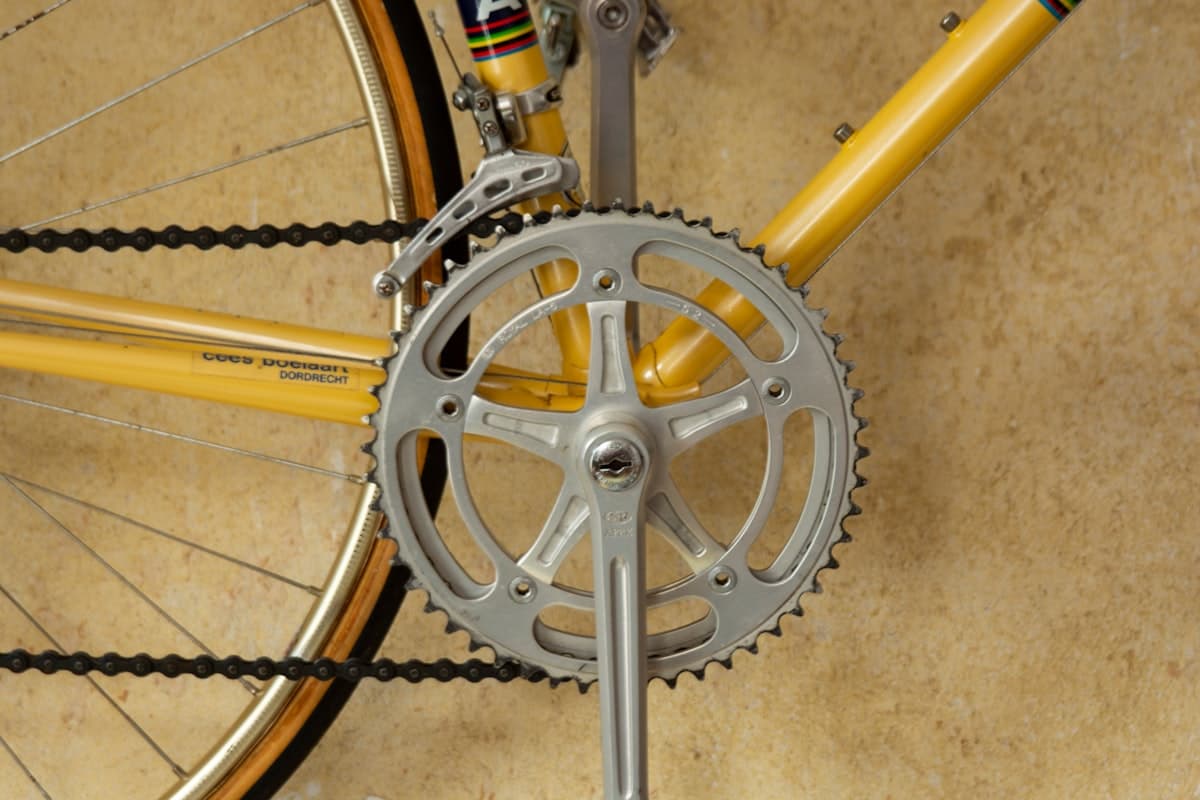
Your bicycle serial number is stamped into the frame by the manufacturer, and in most cases you'll find it underneath the bottom bracket — the part where your pedal cranks meet the frame. Flip your bike upside down, look between the cranks, and there it is. A string of 6 to 10 characters that acts as your bike's fingerprint.
That number matters more than most cyclists realize. Without it, police can't match a recovered bike to its owner. Insurance companies won't process your bicycle theft claim. And if you're buying second-hand, it's the only reliable way to check a stolen bike registry and confirm whether a bike has been reported stolen.
Six places to look
The bottom bracket is the most common spot, but manufacturers aren't always consistent. If you don't see anything there, check these other locations:
Head tube — the front of the frame where the handlebars connect to the fork. Common on Rad Power Bikes and some Schwinn models.
Rear dropout — where the rear wheel axle sits. Typical on BMX bikes.
Seat tube — either near the top where the seat post slides in, or closer to the bottom bracket junction.
Chainstay — the tubes running from the pedals to the rear wheel.
On a sticker — carbon fiber frames can't be stamped without weakening the material, so the serial number is printed on a decal instead. This makes carbon bikes trickier, since stickers can be removed.
Grab a flashlight. Serial numbers are often shallow engravings that collect dirt over time. If the stamping is barely visible, try the old pencil rubbing trick — hold a piece of paper over the area and shade it with a pencil. The number will appear through the paper.
E-bikes have more than one
If you own an e-bike, you might have three serial numbers to track: one on the frame, one on the motor, and one on the battery. The frame number is usually in the same spot as a regular bike, but motor and battery serial numbers vary by brand.
This matters because e-bike theft is growing fast. E-bikes account for roughly 20% of all bike thefts in European surveys, and the average stolen e-bike is worth over EUR 2,000. Recording all three numbers gives you and law enforcement more ways to identify your property if it's recovered.
How to read and decode the number
There's no universal format. Each manufacturer uses its own system, so a Trek serial number looks nothing like a Specialized one. That said, most follow a similar pattern: the first few characters encode the factory, year, and month of production, while the remaining digits are a unique identifier.
Some examples:
Trek numbers often begin with "WTU" followed by a letter for the year
Specialized uses a "WSBC" prefix on many models
Giant typically starts with a two-letter factory code and two-digit year
You don't need to decode the number yourself — the important thing is to record it accurately. But if you're curious about your bike's production date or factory of origin, search for your brand's serial number format online. Several cycling forums maintain decoder guides.
What if your bike has no serial number?
Some bikes genuinely lack one. Very old bikes, custom-built frames, and certain direct-to-consumer brands sometimes skip serial stamping. Carbon fiber bikes are especially vulnerable, since the sticker-based serial can peel off or get removed.
If your bike has no serial number, you still have options:
Check the manufacturer's website. Most brands publish guides explaining where their serial numbers are located — sometimes in spots you wouldn't expect. Search for your brand name plus "serial number location" and you may find it's hiding in plain sight.
Contact the manufacturer. If the serial number is genuinely missing or illegible, reach out to the manufacturer directly. Many can look up your bike's serial number using the model, year, and purchase details. Some will even issue a replacement stamping or sticker.
Take detailed photos. Photograph unique marks, scratches, custom parts, and accessories. These details help identify your specific bike and can support a police report or insurance claim even before you track down the serial number.
Order QR code stickers. Once you've registered your bike, physical QR stickers applied to your frame act as a visible deterrent and link to your bike's registration. Anyone can scan the code and check whether the bike is registered or reported stolen. QR stickers are especially useful on carbon frames where original serial markings are unreliable.
Find it, photograph it, register it
Knowing where your serial number is doesn't help much if you never write it down. The vast majority of bike owners have never recorded their serial number anywhere. When their bike gets stolen, they can't provide it to police — which is one reason bike theft recovery rates across Europe hover around 5%. Bike registration changes those odds dramatically.
Here's what to do right now:
Find your serial number using the locations listed above
Photograph it — a clear, close-up photo stored in your phone or cloud
Register your bike at Bike-Registry.com — it takes about two minutes and it's free
Consider QR stickers — order them through the Bike Registry app for a visible deterrent that links directly to your registration
If you're buying a used bike, ask the seller for the serial number before you pay. You can search it on Bike Registry to check if it's been reported stolen. That one step protects you from unknowingly buying stolen property — and it takes less than a minute.
Your serial number is already on your bike. You just need to find it and put it to work.
Ready to protect your bike? Download the app and register your bike for free.