E-bikes are three times more likely to be stolen than regular bicycles. Only about 4% of stolen e-bikes are ever recovered — less than a third of the already dismal recovery rate for regular bikes. And the financial hit is severe: the average stolen e-bike in Europe is worth around EUR 2,000, with many commuter and cargo models well above that.
As e-bike sales surge across Europe, so does bicycle theft targeting electric models. The Nordic market alone is projected to reach USD 1.6 billion by 2029. Finland saw a 113% increase in e-bike sales between 2021 and 2022. Every new e-bike on the road is another potential target — and thieves have noticed.
Why thieves love e-bikes
Five things make e-bikes more attractive to steal than a regular bicycle:
They're worth more. The average e-bike costs five times what a standard bike costs. A EUR 3,000 e-bike locked outside an office building represents a much bigger payday than a EUR 400 city bike on the next rack.
The resale market is hot. Demand for used e-bikes far outstrips supply. A survey of convicted bike thieves found that 67% of stolen bikes are sold within hours, and 78% are stolen specifically to fill a buyer order. E-bikes move even faster because buyers are willing to pay well for a "deal" that's really stolen property.
Batteries are worth stealing on their own. A replacement e-bike battery costs EUR 300-800. Thieves don't always need to take the whole bike — sometimes they just pop out the battery. It's small, easy to carry, untraceable without registration, and worth hundreds on the second-hand market.
Parts have standalone value. Motors, displays, and controllers each carry resale value. An organized thief can strip an e-bike in a garage and sell components separately, making recovery nearly impossible. This is why the overall e-bike recovery rate is so low.
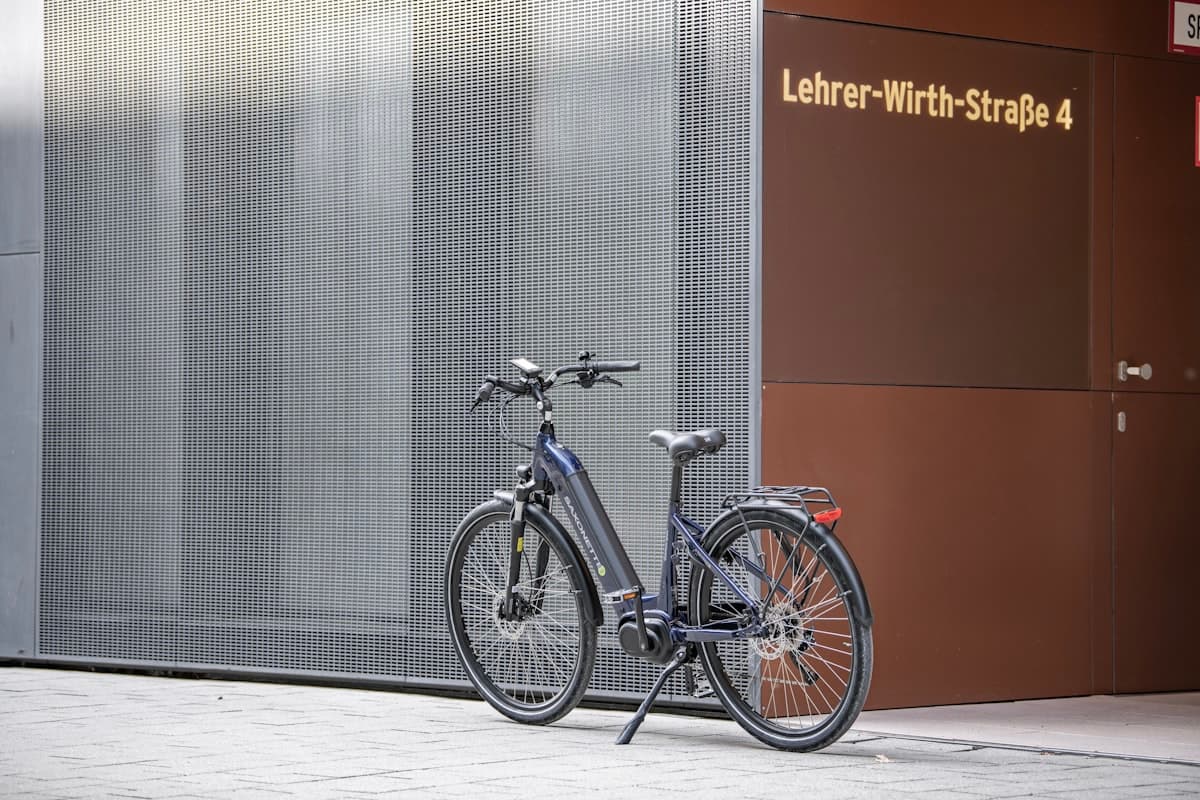
They're easy to spot. E-bikes look different from regular bikes. The motor housing, battery mount, and thicker frame tubes make them identifiable from a distance. A thief scanning a bike rack can pick out the e-bike instantly.
How e-bike theft works differently
Regular bike theft is often opportunistic — a thief with bolt cutters targets a weak lock. E-bike theft is increasingly organized.
Professional rings operate across European cities, scouting e-bikes parked in residential areas. They use vans, angle grinders, and coordinated teams. In the Netherlands, organized e-bike theft accounted for a growing share of the 15% of all stolen bicycles that were electric in 2021 — a proportion that has only risen since.
The location pattern is different too. While regular bike theft clusters around city center racks and train stations, over half of e-bike thefts happen in residential areas — in garages, apartment bike rooms, and garden sheds. Thieves know that e-bike owners bring their bikes indoors, so they target residential areas at night.
Component stripping changes the recovery equation. When a regular bike is stolen, it usually stays intact and can be identified if found. When an e-bike is stripped, the frame, motor, and battery scatter into separate resale channels. Even if police recover the frame, the valuable electronics are gone.
Protecting your e-bike
The standard bike security advice applies — quality U-lock, lock through the frame, well-lit location — but e-bikes need extra layers.
Consider removing your battery when parking. It's heavy and inconvenient, but it removes the single most valuable and easily stolen component. Many thieves will pass on an e-bike without a battery because the resale value drops sharply.
Upgrade your battery lock. Factory-installed battery locks are often basic. Aftermarket options with Bluetooth or fingerprint access add real security. At minimum, make sure your battery can't be removed with a standard Allen key.
Use a GPS tracker. Hidden trackers (purpose-built cycling GPS units, or even an AirTag tucked inside the seat tube) give you a real chance of recovery. Some newer e-bikes from Bosch and Shimano have integrated tracking through companion apps.
Lock with multiple locks. A single U-lock isn't enough for a EUR 3,000 bike. Use a U-lock on the frame and rear wheel, plus a chain through the front wheel. At home, use a ground anchor.
Secure your home storage. Since over half of e-bike thefts happen in residential areas, your garage or apartment bike room needs a lock-up point. A wall anchor and heavy chain cost EUR 50-100 and protect against the most common theft scenario.
Register every serial number
This is where e-bike owners have an advantage over regular bike owners — if they use it. Your e-bike has multiple serial numbers: one on the frame, one on the motor, and one on the battery. Each one is a traceable identifier.
On Bike Registry — a stolen bike registry — you register your bicycle serial number along with photos and details. You can note your motor and battery serial numbers in the bike's description for reference. If your bike is stolen, you flag it in the app — and if a buyer checks the serial number before purchasing second-hand, they'll see the theft flag.
Most bike registries only track frame serial numbers. But e-bike theft increasingly involves stripping — and if only the frame is registered, a recovered motor or battery can't be linked to its owner. Recording all three serial numbers — your frame serial in the registry, and motor and battery serials in the description — helps close that gap.
The math is straightforward: your e-bike cost thousands. Bike registration is free and takes five minutes. Research shows the recovery rate for registered bikes is around 23%, compared to about 4% for unregistered e-bikes. Those are better odds than any lock alone can offer.
Ready to protect your bike? Download the app and register your bike for free.