Finland is the only country in Europe that legally requires every cyclist — adults included — to wear a helmet. The catch? There's no fine for breaking this law. Zero enforcement, ever.
Sweden, meanwhile, only requires helmets for children under 15. But parents who let their kid ride without one can be fined SEK 500.
These two neighbors share a border, a climate, and a cycling culture — but their bike laws diverge in ways that surprise even locals. Whether you're commuting in Helsinki, touring through Stockholm, or buying an e-bike, here's what you need to know.
Helmets: mandatory without consequences vs. enforced for kids
Finland's helmet law has been on the books since 2003. The Road Traffic Act states that cyclists "shall" wear a helmet. But the law includes no penalty clause, which means police cannot issue a fine. The result is one of Europe's stranger traffic rules — a legal obligation that exists entirely on the honor system. About 40% of Finnish cyclists actually wear helmets, according to Liikenneturva.
Sweden takes the opposite approach. No helmet requirement for adults. For children under 15, helmets are mandatory, and police can fine the supervising parent SEK 500 (about EUR 45) if the child isn't wearing one. The fine targets the parent, not the child.
Wear a helmet in both countries. The law may or may not require it, but your head doesn't care about legal technicalities.
Bottom line:
Lights, reflectors, and equipment
Both countries take visibility seriously, and this is where fines actually bite.
Finland: A white or pale yellow front light and a red rear light are mandatory when riding in darkness, dusk, or poor visibility. Reflectors — front, rear, and side — are required at all times, day and night. Missing your lights can cost you a EUR 40 summary penal fee from the police. You also need a bell and at least one working brake (two brakes if your bike has more than two gears).
Sweden: White front light, red rear light, and a rear reflector visible from 300 meters — all required between sunset and sunrise. Fines are steeper: SEK 500 for a missing front light and SEK 500 for a missing rear light. That's up to SEK 1,000 (about EUR 90) if you're riding dark on both ends. A bell and working brakes are also mandatory — missing a bell is another SEK 500 fine.
Quick comparison:
Rule
Finland
Sweden
Front light
Required (dark/dusk)
Required (sunset-sunrise)
Rear light
Required (dark/dusk)
Required (sunset-sunrise)
Reflectors
Required always
Rear reflector required
Bell
Required
Required (SEK 500 fine)
No-light fine
EUR 40
SEK 500 per light
Where you can ride
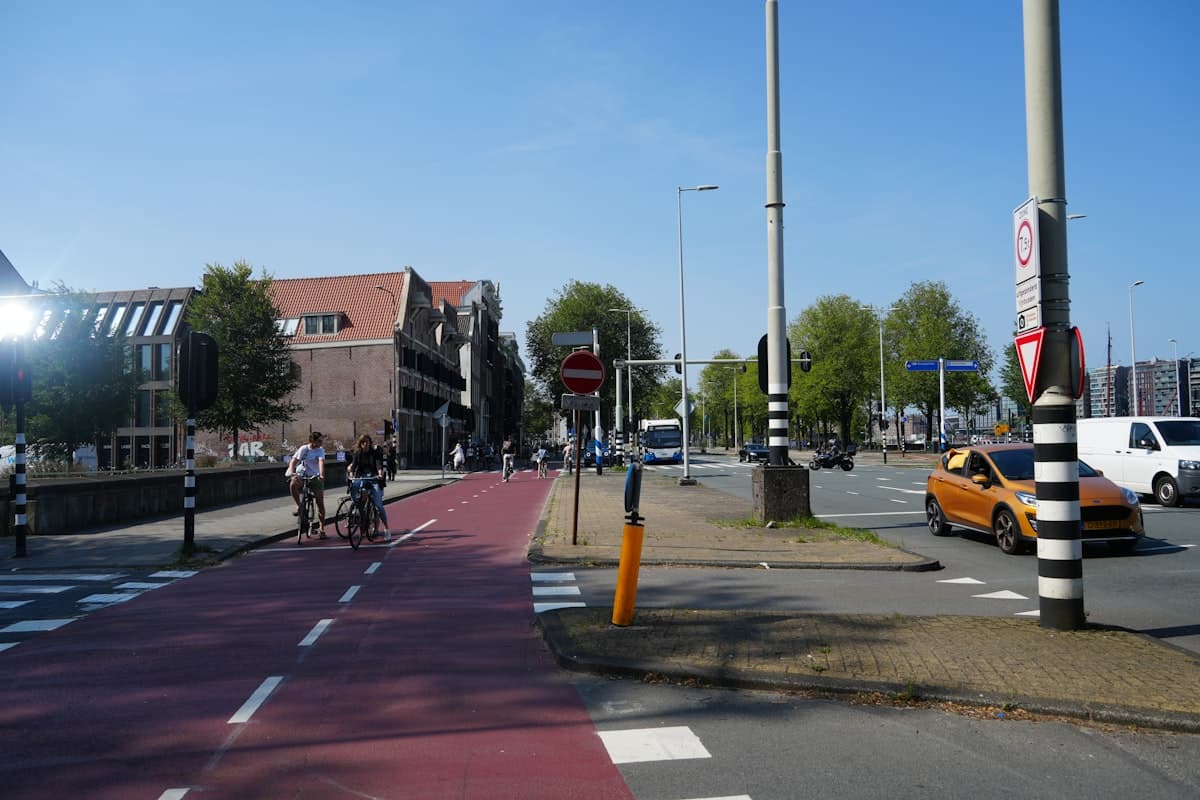
Finland is strict: if a cycle path exists in your direction of travel, you must use it. Riding on the road when there's a parallel bike path is a fineable offense. If there's no cycle path, ride on the right-side verge. No verge? Ride as far right on the road as safely possible. Cycling on pedestrian paths is prohibited — except for children under 12, who must still yield to pedestrians.
Sweden gives cyclists more flexibility. If the road's speed limit is under 50 km/h, you can choose between the road and the cycle path. At 50 km/h or above, the cycle path is mandatory when one exists. Cyclists must yield to pedestrians at crosswalks.
Both countries require riding single file in traffic, not side by side.
Cycling under the influence
Here's where the two countries really diverge.
Finland treats drunk cycling seriously. Under the Road Traffic Act, cycling while intoxicated is illegal if your riding puts other road users in danger. Penalties can include fines or up to three months of imprisonment. Police do stop cyclists for erratic riding, especially in cities during summer nights.
Sweden is remarkably lenient. There is no specific law against cycling drunk. It only becomes an offense if your riding is reckless enough to endanger others — and that's a high bar. In practice, cycling home from a bar in Stockholm is perfectly legal. This surprises many visitors and even some Swedes.
E-bike rules: what counts as a bicycle?
Both countries follow the EU standard for electric bikes (EPACs):
Maximum motor power: 250 watts continuous
Pedal-assist only: The motor must cut off when you stop pedaling
Maximum assisted speed: 25 km/h
Any e-bike meeting these specs is legally treated as a regular bicycle. No license, no registration, no insurance required. You ride it on cycle paths, lock it at bike racks, and follow the same rules as a pedal bike.
Speed pedelecs (motors up to 45 km/h) are a different category entirely. In both Finland and Sweden, these are classified as mopeds. That means mandatory helmet, insurance, registration, and — depending on the model — a driver's license. They're also banned from most cycle paths.
If you're buying an e-bike, check the specs. The 250W / 25 km/h threshold is the line between "bicycle" and "motor vehicle" in both countries.
Fines at a glance
Violation
Finland
Sweden
No helmet
No fine (adults)
No fine (adults); SEK 500 for parent of child under 15
No front light
EUR 40
SEK 500
No rear light
EUR 40
SEK 500
No bell
—
SEK 500
Running a red light
EUR 40-80
SEK 1,500
Drunk cycling
Fines or up to 3 months imprisonment
No specific offense (unless reckless)
Note: Finland uses income-based "day fines" for serious traffic offenses, though bicycle violations typically result in fixed summary fees. Sweden uses flat-rate fines.
What happens if your bike gets stolen
Both Finland and Sweden have high rates of bicycle theft — around 17,000 reported annually in Finland and 57,000 in Sweden. Neither country requires bike registration by law, but both police forces strongly recommend recording your serial number.
In Finland, police ask for the serial number (runkonumero) when you file a theft report. Without it, your bike can't be flagged as stolen in their system. If police recover a bike but can't match it to an owner, it ends up at auction.
In Sweden, the national bike database (cykeldatabasen.se) links bikes to owners. Police can query it during stops and investigations. But the database only helps if your bike is actually in it.
In both countries, buying a bike you know (or should know) is stolen is a criminal offense. Checking a serial number before buying a used bike isn't just smart — it's due diligence that protects you from receiving stolen property.
This is where Bike Registry fits in. Registering your bicycle serial number, photos, and details creates a searchable record that works across borders. Anyone — in Finland, Sweden, or anywhere else — can search a serial number to check if a bike is registered or reported stolen. Bike registration takes two minutes and costs nothing. It won't keep you from getting a cycling fine, but it might get your bike back.
Ready to protect your bike? Download the app and register your bike for free.