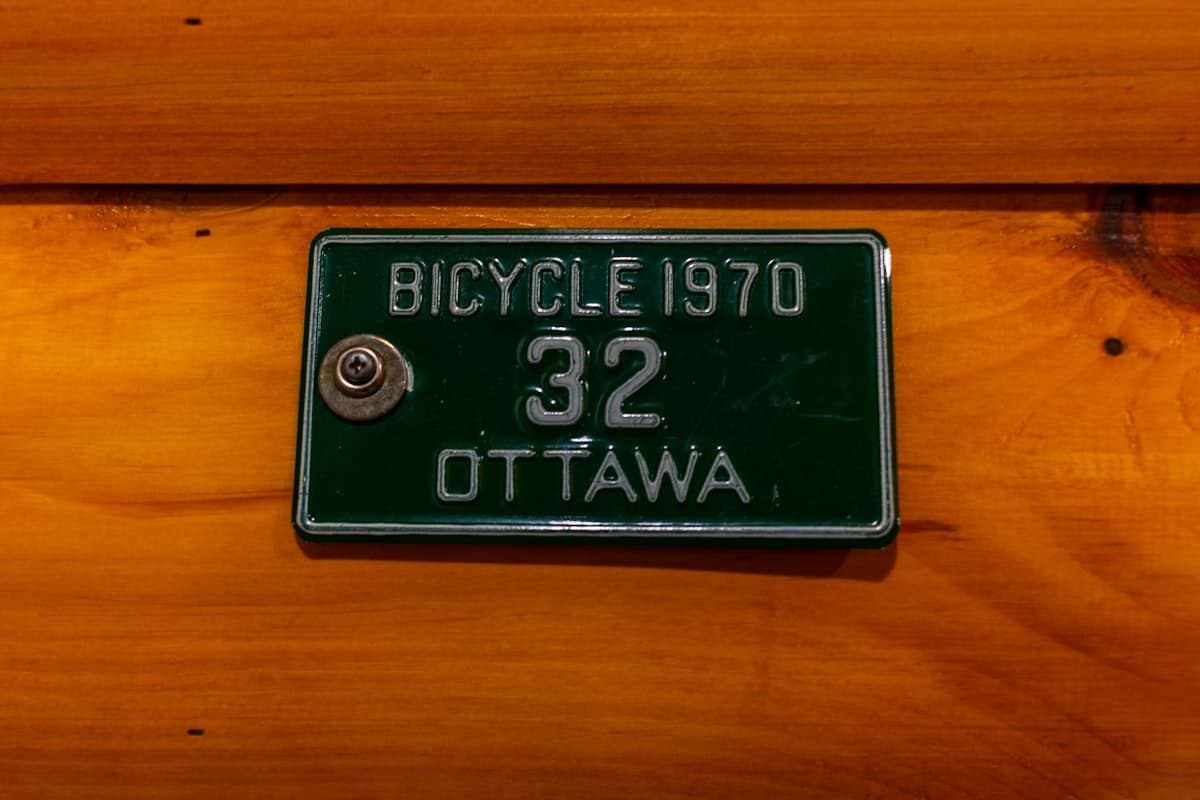
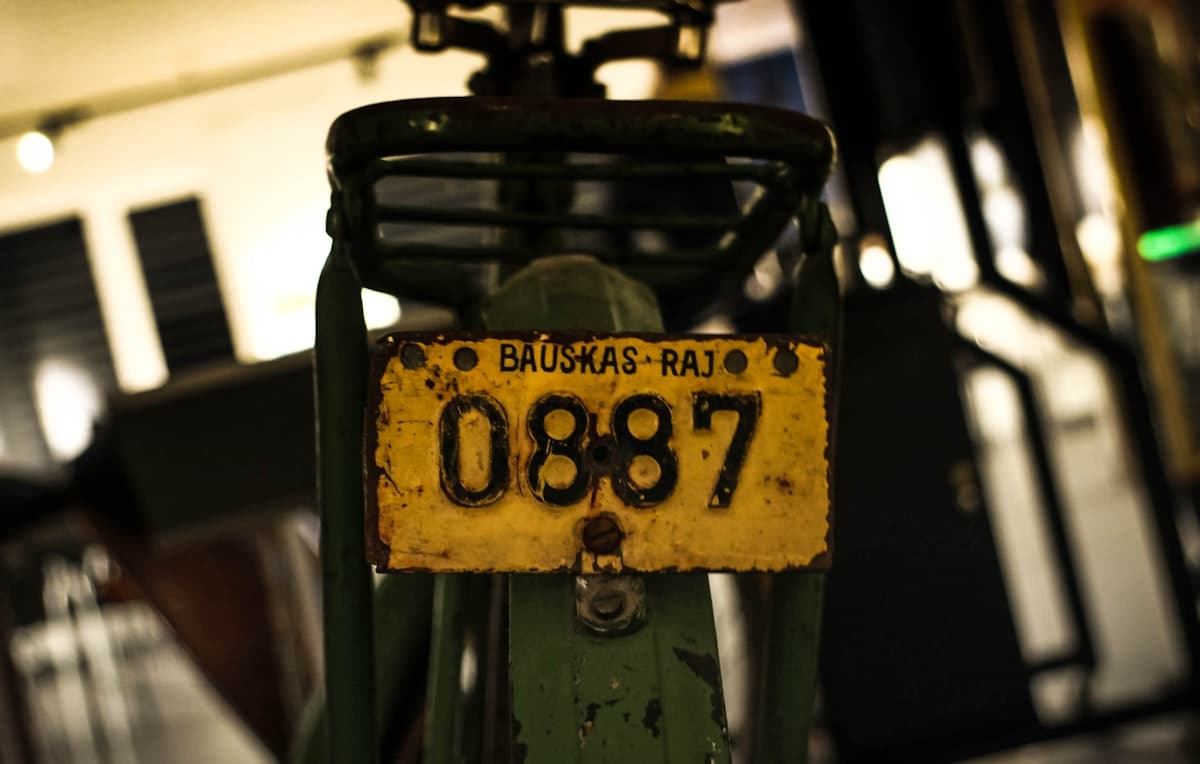
In the 1890s, when the bicycle craze swept through Europe and North America, British frame builders began scratching sequential numbers into their steel tubes — not for customers, but for themselves. Workshop ledgers recorded each frame number alongside the date it was sold and the buyer's name. If a frame cracked or a fork failed, the builder could trace it back to the exact batch of steel tubing. That humble bookkeeping practice, born in Victorian-era workshops, is the ancestor of every serial number stamped into every bicycle frame today.
Yet more than a century later, there is still no universal format. Every manufacturer uses its own system. A Trek serial number looks nothing like a Specialized one, and neither resembles what you'd find on a Giant. Understanding what those characters mean — and why they vary so wildly — starts with understanding how the bicycle industry grew up.
From workshop ledgers to factory stamps
Early bicycle manufacturers were small operations. A handful of craftsmen would build frames by hand, brazing steel tubes together in a workshop. Each finished frame got a sequential number: 001, 002, 003. The number told the builder how many frames they had produced and helped track warranty claims if something went wrong.
As the industry scaled in the early twentieth century, factories needed more information packed into fewer characters. A simple sequence number was no longer enough when a single factory was producing thousands of frames per month across multiple models. Manufacturers began encoding the production year, month, factory location, and model line directly into the serial number. The result was an alphanumeric string that served as both a production record and a unique identifier — a system that remains largely unchanged in principle today.
What a serial number actually encodes
Most bicycle serial numbers contain three layers of information, even if the exact format differs between brands:
Factory or origin code — one to three characters identifying where the frame was manufactured. With global production spread across factories in Taiwan, China, Vietnam, and Europe, this prefix tells you which facility built your frame.
Date of production — encoded as a year and sometimes a month. Some brands use a single letter to represent the year (A = 2001, B = 2002, and so on), while others use two-digit numbers. The month might be a number (01-12) or a letter (A through L).
Sequence number — the remaining digits identify your specific frame within that production run. This is what makes your serial number unique. Two bikes built in the same factory on the same day will differ only in these final digits.
Together, these elements create a string that typically runs six to ten characters long. Some manufacturers add model codes or frame size indicators, pushing the total higher.
How major brands format their numbers
While no two manufacturers use the same system, looking at a few well-known brands illustrates how serial numbers work in practice.
Trek serial numbers frequently begin with "WTU." The letters following this prefix encode the production day and factory, with later characters representing the frame's position in that day's production run. A final letter indicates the model year. So a Trek serial number is essentially a timestamp combined with a production counter.
Specialized often uses prefixes like "WSBC," "WUD," "STT," or "STE," followed by six to ten numeric digits. The prefix indicates the factory, while the numeric portion encodes the production sequence. Specialized also places serial number stickers on the underside of the top tube on some models, in addition to the stamped number on the bottom bracket.
Giant, one of the world's largest frame manufacturers (building frames for many other brands as well), typically starts serial numbers with a two-letter factory code such as "GM," followed by digits encoding the year and a sequential production number. Because Giant manufactures frames for dozens of brands under contract, the same factory code can appear on bikes wearing very different logos.
Peugeot, a brand with over a century of bicycle production, changed its numbering system multiple times across decades. Vintage Peugeot enthusiasts have spent years reconstructing which number ranges correspond to which production years — a task made harder by incomplete factory records.
Why there is no universal standard
The automobile industry solved this problem decades ago with the Vehicle Identification Number — the 17-character VIN system standardized internationally in the 1980s. Every car in the world follows the same format, making identification straightforward for police, insurers, and buyers.
Bicycles have no equivalent. The ASTM F2268 standard specifies a format for bicycle serial numbers — including the number of characters and physical requirements for stamping — but adoption is voluntary. Most manufacturers acknowledge the standard exists and then continue using their own proprietary systems.
Several factors explain why:
Scale and cost. The bicycle industry produces over 100 million bikes per year worldwide, across thousands of manufacturers. Coordinating a universal format would require industry-wide agreement and retooling of production lines.
No legal mandate. Unlike motor vehicles, bicycles are not required by law in most countries to carry a standardized identification number. Without regulation, there is no enforcement mechanism.
Contract manufacturing. A significant share of the world's bicycle frames are built by a handful of large Taiwanese and Chinese factories (Giant, Merida, and others) under contract for dozens of brands. Each brand specifies its own serial format, even when the frames come off the same production line.
Legacy systems. Brands with decades of production history have millions of frames already in circulation under their existing numbering systems. Switching to a new format would create a break in their records.
The result is the fragmented landscape we have today: every brand does it differently, and no single database can decode all of them.
The push for better identification
The lack of standardization is more than an inconvenience — it directly affects bike theft recovery. When police recover a bicycle, the serial number is often the only way to match it to a theft report. But if the number isn't recorded anywhere, or if officers can't determine what brand the frame belongs to, the bike sits unclaimed.
This is where bike registration fills the gap. Services like Bike Index, national police databases, and platforms like Bike Registry allow owners to record their serial number alongside their contact details. The format of the number doesn't matter — what matters is that it's written down accurately and linked to an owner.
Registration also sidesteps the decoding problem entirely. Police don't need to know that "WTU" means Trek or that "GM" means Giant. They just need to search the number and find a match. The serial number becomes a lookup key rather than a code that requires interpretation.
In Europe, the growing e-bike market is accelerating the conversation around standardization. E-bikes carry motor and battery serial numbers in addition to the frame number, and EU regulations around product safety and battery tracking may eventually extend to frame identification. Whether that leads to a bicycle equivalent of the VIN remains to be seen, but the direction of travel is clear.
What this means for you as a bike owner
You don't need to decode your serial number to protect your bike. The history is interesting — and knowing that your serial number contains a hidden record of where and when your frame was built adds a layer of connection to your ride. But the practical takeaway is simpler: find the number, record it, and register it.
If you haven't located your serial number yet, our companion guide on where to find your bike serial number walks through the six most common locations on a frame. Once you have it, registering takes about two minutes.
As autumn settles in and you spend more time with your bike indoors — cleaning it, maintaining it, storing it for winter — take a moment to flip it over and look at those stamped characters on the bottom bracket. They carry over a century of manufacturing history. More importantly, they carry the key to getting your bike back if it ever goes missing.
Ready to protect your bike? Download the app and register your bike for free.