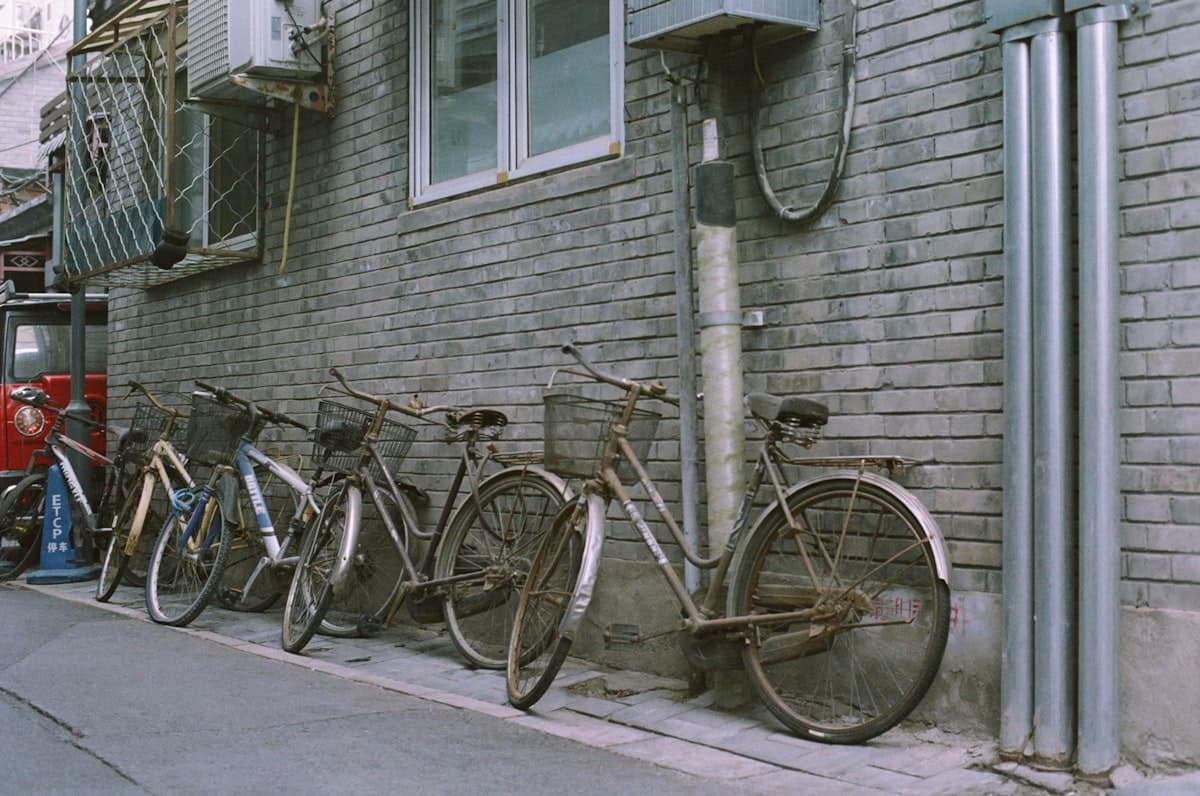
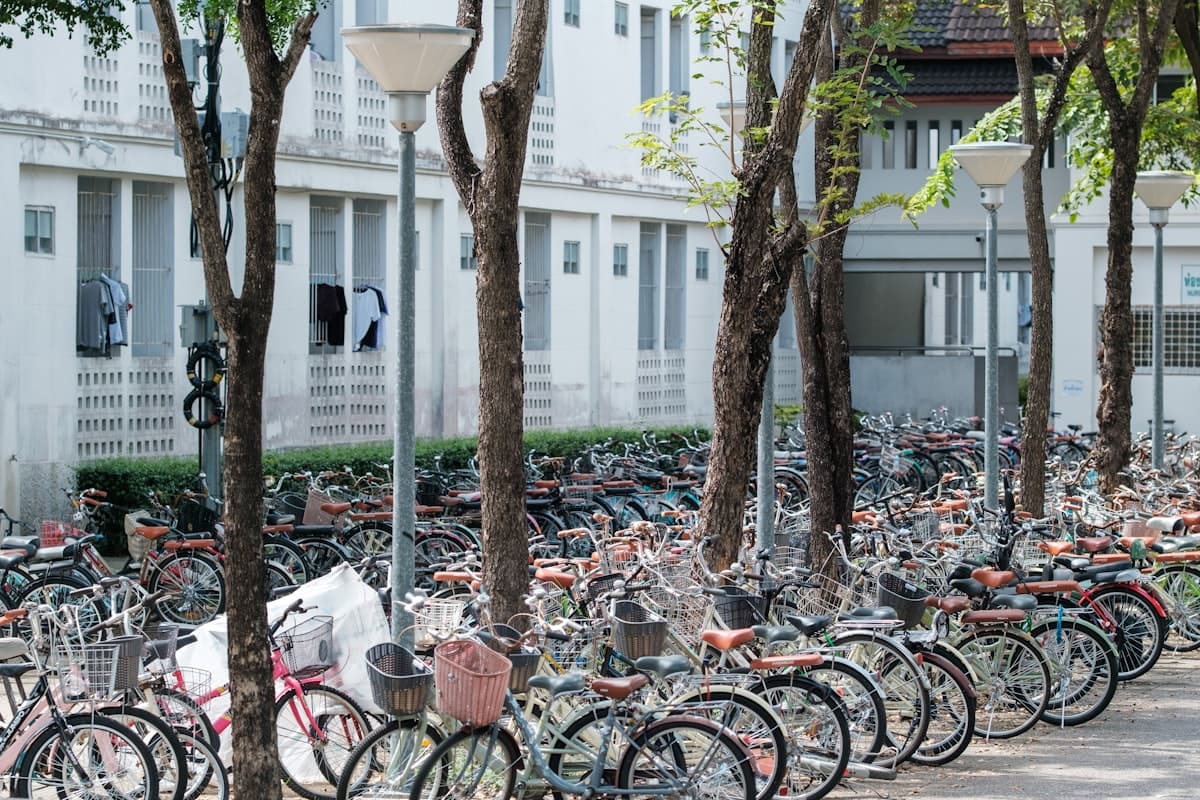
You wheel your bike into the communal storage room in the basement of your apartment building. There are a dozen other bikes in there, leaning against walls and each other. The door closes behind you — but you notice the lock hasn't latched properly. It hasn't for weeks. You loop a cable lock around the frame, glance at the lack of cameras, and head upstairs. Three days later, the bike is gone.
This is one of the most common theft scenarios in Nordic apartment living. Research consistently shows that over half of bike thefts happen in residential areas — not at train stations or city centres, but at home. In Finland, around 14,000 bicycles are reported stolen every year. In Sweden, the number exceeds 55,000 reported thefts, and a VTI study found that fewer than 1 in 8 thefts are actually reported. Many of those stolen bikes were sitting in shared storage rooms that residents assumed were safe.
As autumn sets in and cycling season winds down, millions of apartment dwellers across the Nordics face the same question: where do I put my bike for the next six months? The answer matters more than most people think — both for the bike's condition and its security.
The problem with communal bike rooms
Shared bike storage in apartment buildings is standard across Finland and Sweden. Nearly every residential building has one. The trouble is that these rooms are designed for convenience, not security.
Common vulnerabilities include doors with broken or weak locks, lack of surveillance cameras, shared access codes that never get changed, and ground-floor windows that can be forced open. A thief who gets into one of these rooms has access to every bike inside — and plenty of time to work, since residents rarely visit the storage room daily during the off-season.
If your building's bike room is your only option, treat it as semi-public space. Use a quality U-lock or heavy chain lock, secure the frame and at least one wheel to a fixed rack or anchor point, and remove accessories like lights and cycling computers. Never rely on the room's door lock as your sole line of defence.
Indoor apartment storage: wall mounts and vertical stands
Bringing your bike inside your apartment is the single most effective bike theft prevention measure. A bike behind your front door is a bike no thief can reach. The challenge, of course, is space.
For small apartments, wall-mounted hooks are the most popular solution. A single hook screwed into a wall stud lets you hang your bike vertically by the front wheel, taking up a footprint of roughly 60 cm wide and 20 cm deep. The bike extends upward along the wall rather than across the floor. This works well in hallways, behind doors, or in any narrow space with enough ceiling height.
Freestanding vertical stands offer a drill-free alternative for renters. Floor-to-ceiling tension poles hold one or two bikes vertically without touching the walls, and can be repositioned whenever you rearrange. Horizontal wall-mounted racks — the kind that hold the bike parallel to the wall by both wheels — are another option if you have a long, empty wall section.
For ceiling storage, pulley-based hoists let you raise and lower the bike with a rope, keeping it overhead and completely out of the way. These work best in rooms with high ceilings — at least 2.5 metres to keep the bike above head height. Installation requires ceiling joists or solid mounting points, so check your ceiling construction before drilling.
A few practical tips for indoor storage: place a towel or mat under the bike to catch drips, especially after autumn and winter rides. Use a frame protector or old inner tube around contact points where the bike touches the mount. And if you have an e-bike, remove the battery before hoisting or wall-mounting — batteries are heavy, and storing them at room temperature extends their lifespan.
Balcony storage: better than the basement, worse than indoors
A balcony sits somewhere between a communal bike room and your living room in terms of security. Thieves can't walk in from a shared hallway, but bikes on ground-floor or low-floor balconies are still visible and reachable. Upper-floor balconies are safer from theft, though not from weather.
If your balcony is your best option, lock the bike to the balcony railing with a solid U-lock — even several floors up. Opportunistic theft from balconies does happen, and building maintenance workers, movers, and others may have temporary access.
Weather is the bigger concern. Rain, snow, freezing temperatures, and UV exposure will damage a bike left uncovered on a balcony through the winter. At minimum, use a waterproof bike cover made from heavy-duty polyester (210D or thicker) with sealed seams. Make sure the cover extends to the ground and is secured so wind doesn't blow it off. Even with a cover, moisture can get trapped underneath, so check periodically and ventilate on dry days.
For longer-term balcony storage, apply extra lubrication to the chain and cables, and consider using marine grease on metal components prone to rust. Inflate tires slightly above normal pressure to compensate for the slow pressure loss that happens over months of sitting.
Locking strategy for shared spaces
Whether your bike lives in a communal room, a shared garage, or a covered courtyard, your locking strategy should assume that someone with bad intentions will eventually have access.
Use a U-lock, not a cable lock. Cable locks can be cut in seconds with basic hand tools. A hardened steel U-lock or a heavy chain lock with a disc-detainer mechanism takes real time and power tools to defeat.
Lock through the frame and one wheel. A wheel locked by itself gets left behind. The frame is the valuable part — always include it in the lock.
Lock to something immovable. A floor anchor, a wall-mounted rack, or a heavy fixed rail. If the racks in your bike room are just freestanding and can be lifted, your lock is only as strong as the rack.
Remove quick-release components. If your wheels or saddle use quick-release levers, either replace them with security skewers or take removable parts upstairs with you.
Consider two locks of different types. A U-lock plus a chain lock means a thief needs two different tools and twice the time. For high-value bikes and e-bikes, this double-lock approach is standard advice from theft prevention organisations.
Registration: your safety net for communal storage
Even with a good lock, communal storage carries risk. The practical question is: if your bike does get stolen, can you prove you own it and give police enough information to identify it?
This is where registration makes a measurable difference. Research shows that registered bikes have recovery rates around 15% when theft is reported through multiple channels — compared to roughly 5% for unregistered bikes. The gap comes down to information: a registered bike has its serial number, photos, and identifying details already documented and ready to share with police the moment a theft is reported.
Before you store your bike for winter, take five minutes to confirm your registration is current. Check that your bicycle serial number — stamped on the underside of the bottom bracket — is recorded correctly. Upload recent photos showing any distinguishing marks, stickers, or aftermarket parts. If you've added accessories or swapped components during the summer, update those details now, while the bike is in front of you.
For residents of buildings with shared storage, registration also helps housing companies and police connect recovered bikes to owners. A bike found abandoned in a park is nearly impossible to return if nobody has documented its serial number. A registered bike can be matched in minutes.
Winter prep before storing your bike
Putting your bike into storage dirty is one of the most common mistakes apartment cyclists make. Road grime, salt residue, and moisture left on components over the winter cause corrosion, seized bolts, and degraded brake pads. Thirty minutes of preparation in September saves hours of repair in April.
Start with a thorough wash. Use warm water and a mild bike-specific cleaner or dish soap to scrub the frame, wheels, and drivetrain. Pay attention to the chain, cassette, and derailleur — these collect the most grit. Rinse thoroughly and dry completely before applying any lubricant.
Next, clean and lubricate the chain with a quality bike-specific lube. Apply a thin layer — excess lubricant attracts dust. Lubricate brake and derailleur cables to prevent them from sticking or snapping when you take the bike out in spring. A light coating of frame polish or spray wax on the frame adds a layer of protection against moisture.
Check tire pressure. For bikes stored on a hook or stand where the tires are off the ground, normal pressure is fine. For bikes resting on the floor, inflate to the upper end of the recommended range — tires lose pressure gradually, and underinflated tires develop flat spots over months of sitting.
Finally, if you're storing an e-bike, remove the battery and keep it indoors at room temperature. Most manufacturers recommend storing lithium-ion batteries at 40-80% charge — not full and not empty. Check the charge level once a month and top it up if it drops below 30%.
Autumn is the season when your bike is most vulnerable — parked for months in a shared room, out of sight and out of mind. The combination of proper storage, solid locking, and up-to-date registration is what separates the bike that's still there in spring from the one that isn't.
Ready to protect your bike? Download the app and register your bike for free.