To prepare your bike for winter storage, wash off the road grit, dry it and oil the chain, pump the tyres up, take an e-bike battery out and store it part-charged somewhere cool, dry and fitted with a smoke alarm, and lock the bike to something fixed. Then spend ten more minutes writing down what the bike is. That last step is the one people skip, and it is the one you will want in April if the storage room has been emptied.
None of this needs a workshop. Most of it needs a bucket, a rag and an evening.
Clean, dry and oil it before it sits
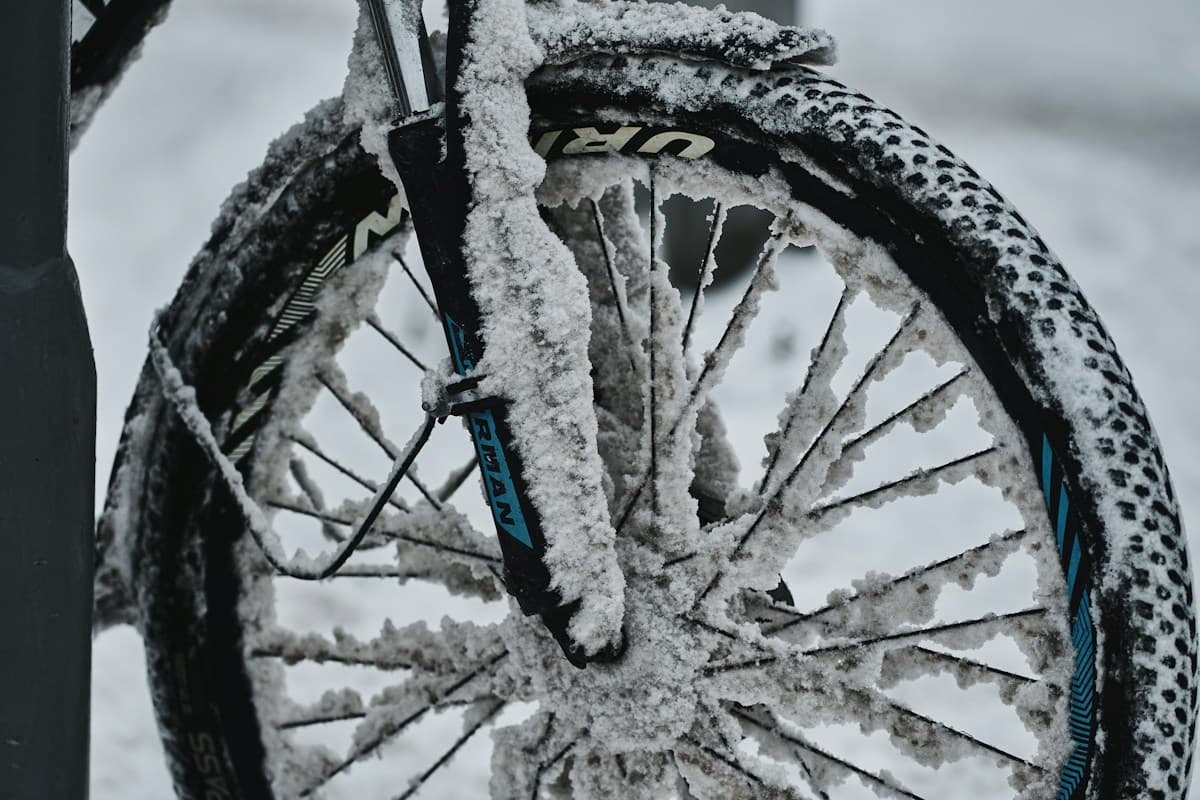
Autumn riding coats a bike in a paste of sand, leaf mulch and, in towns that grit their streets, salt. Left on for five months, that paste holds moisture against the chain, the cassette and every bolt head. Rust that would have taken a season of riding to form gets the whole winter to work undisturbed.
The routine is short:
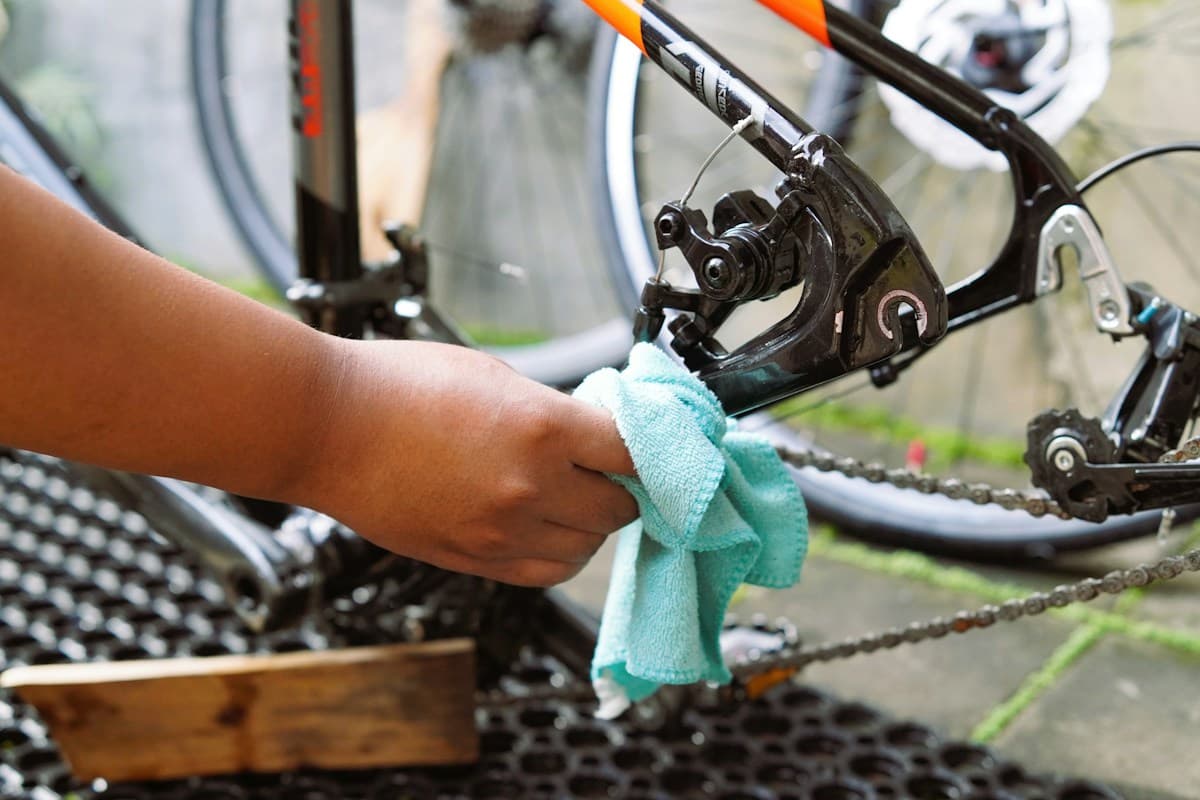
Wash with water and a mild bike cleaner or dish soap. Skip the pressure washer near the hubs, headset and bottom bracket, where it drives water past the seals.
Dry it properly, chain included. Spin the cranks backwards through a rag, then leave the bike somewhere warm for an hour.
Oil the chain once it is dry, let it soak in for a few minutes and wipe off the excess. A dry chain rusts, and a dripping one collects dust.
Look it over while it is clean. Worn brake pads, a frayed cable or a cracked tyre sidewall are easier to spot on a clean bike, and the bike shop is quieter in November than in April.
If you want to go further, a thin film of oil or wax on bare steel parts, such as bolt heads and the chain stays near the chain, helps on a bike that will live in a damp cellar.
Tyres and the way it stands
Inner tubes lose air slowly whatever you do. A bike resting on flat tyres for months puts its weight on one small patch of each tyre, which can leave a weak spot in the casing.
Two ways around it. Pump the tyres to the upper end of the pressure printed on the sidewall and check them once or twice over the winter. Or take the weight off entirely by hanging the bike from a wall hook or standing it on a rack. Hanging also keeps it off a cold concrete floor that sweats when the weather turns.
Leave the gears in the smallest sprocket at the back, so the derailleur spring and the cable sit at their lowest tension. Then take off anything that can walk away on its own: lights, the bike computer, the saddle bag and, if it has quick-release levers, the saddle.
The e-bike battery is the part that needs a plan
A lithium-ion battery cares more about where and how it spends the winter than about anything else on the bike. Bosch eBike Systems publishes specific numbers.
"Ideally, store your battery at a charge level of 30% to 60% and at temperatures between 0 °C and 20 °C in a dry environment, or between 10 °C and 20 °C in a damp environment with condensation."
Dr. Vikram Godbole, Senior Product Manager for batteries and chargers, Bosch eBike Systems, in 12 questions about your eBike battery (translated from German)
On the same page Bosch recommends taking the battery off the bike if it will be unused for a long time. It describes the best place to keep it as a well-ventilated room with a smoke alarm, away from heat sources and anything flammable. Neither a full nor an empty battery is good for its lifespan. Other brands publish their own figures, so check your manual if your motor isn't a Bosch.
The fire side is worth taking seriously. Finland's safety agency Tukes counted 103 fires in 2025 caused by the battery or charger of a rechargeable device, after 108 the year before. In London, where the figures are broken out by vehicle, the fire brigade attended 206 e-bike and e-scooter fires in 2025, up from 171 in 2024. Deputy Commissioner Spencer Sutcliff put that as "an e-bike or e-scooter fire every other day, on average."
Finnish insurer Pohjola ran its own burn tests in 2025 and drew three practical conclusions, reported by Taloustaito:
Batteries caught fire after being removed from the bike, not only while charging.
A battery that is damaged or has been soaked can ignite even when it isn't charging. Swelling or dents mean it should not be used again.
Never store or charge a battery in the hallway or a bedroom, and don't leave it charging overnight.
Put together: charge it to roughly half, note the date, and store it in a dry, ventilated space with a smoke alarm and nothing piled around it. Top it up if the charge has dropped low by midwinter. Keep it out of the escape route from your home.
Where it sleeps, and what it is locked to
A locked storage room feels like the safe choice. The claims data says it is only partly true. Insurer LähiTapiola found that about 26% of the bicycles stolen from its customers in January to July 2021 had been taken from a locked bike store, up from 20% a year earlier. For bikes with claims over €1,000, the share taken from locked indoor spaces was 40%. Expensive bikes get stolen from behind doors, because that is where expensive bikes are kept.
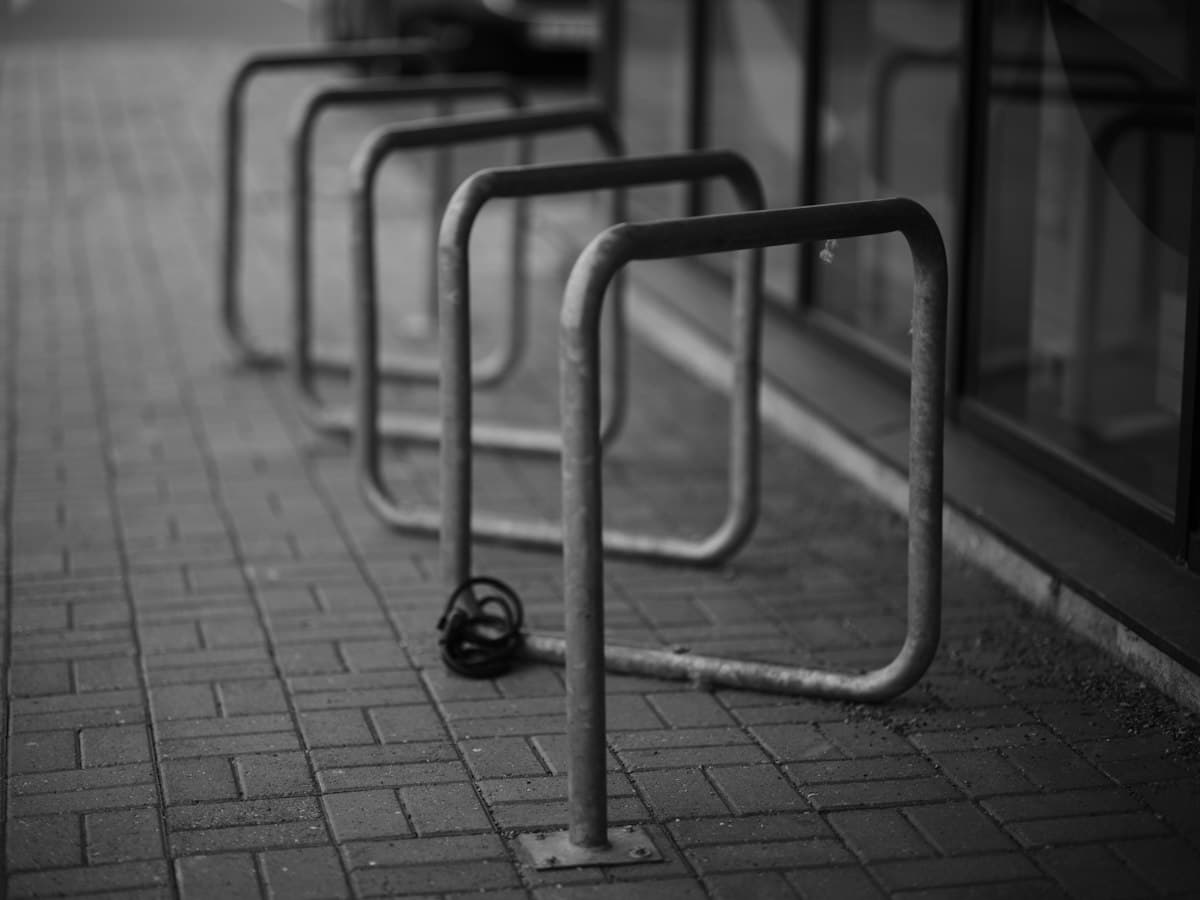
So the storage room door is the first barrier, not the only one. Lock the frame to a fixed rack or wall anchor with a proper U-lock or chain, not a cable. If your building has nothing fixed to lock to, ask the housing company whether a wall or ground anchor can be fitted. Our post on apartment bike storage covers the locking side in detail.
Check your home insurance terms while you are at it. Some policies expect the bike to be locked even inside a locked room, and a claim can be reduced if it wasn't, so read the theft section rather than assuming. In Sweden, the typical excess on a bike theft claim is 25% of the bike's value, according to the consumer insurance advisory Konsumenternas, so the insurer won't make you whole anyway. The better outcome is getting the bike itself back.
Ten minutes of paperwork before you close the door
A stored bike is out of sight for months. If someone empties the cellar in January, you may not notice until the first warm weekend, and by then you are trying to describe a bike from memory to the police and your insurer.
While the bike is clean and in front of you, do this:
Find the frame number, your bicycle serial number, usually stamped under the bottom bracket, and write it down. If you aren't sure where to look, here is a guide.
Take photos: both sides, the frame number, and anything that makes your bike yours, like a scratch, a sticker or a non-standard saddle. Good registration photos take a couple of minutes.
Keep the receipt with the photos, and note the battery's serial number if it has one.
Register the bike, or update the record if you changed parts over the summer. Bike registration takes five minutes, and a registered frame number is what lets police connect a recovered bike to its owner, and the record is what your insurer will ask for.
When spring comes, the order reverses. Check that the bike and its battery are where you left them, pump the tyres, test the brakes and charge the battery fully before the first ride.
Five minutes, free: register your bike before it goes into storage, or download the app for iOS or Android. Keeping a winter bike on the road instead? The Oulu winter cycling story shows how the world's winter cycling capital does it.