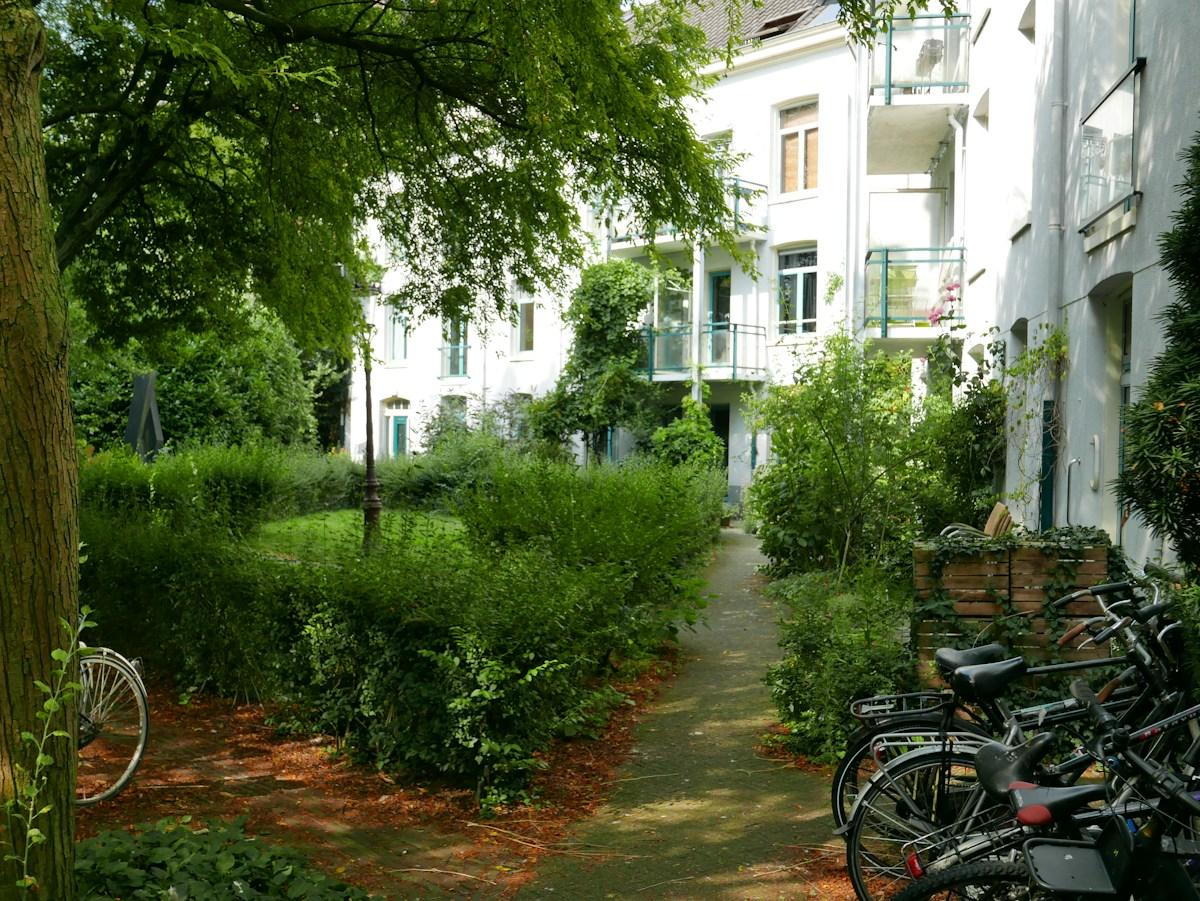
Bike theft in apartment buildings is mostly a problem of the building, not of the bike. Thieves get into the shared bike room through a door that doesn't latch, behind a resident, or with a key nobody has asked back, and once inside they can take several bikes in one visit. Staying safe means locking each bike to something fixed even behind a locked door, and getting the housing company to treat the bike room as the weak point it is.
Why bike rooms attract thieves
Statistics Finland's figures show 14,058 bicycles and 2,433 e-bikes stolen in 2024, as published by the security company Mysafety. E-bike thefts have more than doubled since 2021, when the count was 1,119. Nobody publishes a national breakdown of where those bikes were taken from, but the people who handle the claims all point to the same place.
"A growing phenomenon is bikes being taken from bike storage rooms, and a locked storage room doesn't necessarily help."
Johanna Abgottspon, Country Manager Finland, Mysafety, in the same release (translated from Finnish)
A bike room is attractive for three reasons. It holds a lot of bikes in one place. Nobody sees what goes on inside, especially in winter, when some owners don't open the door for months. And residents trust it: in a LähiTapiola survey, 28% of respondents admitted leaving their bike unlocked, or locking it worse than usual, in their home storage or bike cellar. Another 27% did the same in the building's own yard.
The finance industry's security expert Aku Pänkäläinen has warned housing companies that a thief who gets into the basement rarely leaves with one bike. "Several valuable bikes may be taken from a housing company's basement at the same time," he told Verkkouutiset.
How thieves get in
Very few bike room thefts look like a break-in. The usual ways in are duller than that:
A door that doesn't close. A worn latch, a door closer that has lost its pull, or a door propped open with a brick so someone could carry in a pram.
Following a resident. Someone walks in behind a neighbour who holds the door out of politeness, or slips through the garage gate after a car.
Keys in the wrong hands. Former tenants, removal crews and tradespeople all hold or have held keys. In many older buildings the same key opens the front door, the bike room and the laundry.
Time. A theft in November may not be noticed until April. By then there is no footage left, no fresh witness and no chance of catching the bike before it is sold.
None of these need tools. That is also why a locked bike room on its own is not much of a defence. Our guide to how bike thieves operate covers the methods in more detail.
What you can do as a resident
Lock the bike as if the room were a street. Use a solid U-lock or chain, and lock the frame to a fixed rack or wall anchor, not just the wheel. It also matters for insurance. "A locked outer door of a housing company's bike store does not remove the need to lock the bike itself," Verkkouutiset summarised the insurers' position, quoting claims expert Eija Hämäläinen of Pohjantähti: home insurance does not pay for the theft of an unlocked bike.
Lock the household's bikes together. Pänkäläinen's simplest piece of advice is to chain all of a household's bikes together whenever they are parked. Three bikes in one bundle are slow and awkward to carry out.
Take the expensive parts upstairs. An e-bike battery and display are worth stealing on their own, and the battery is better off at room temperature anyway. Lights and bags go up too.
Don't hold the door. It feels rude, but asking "which flat are you visiting?" is a perfectly normal question. If the door doesn't latch, report it to maintenance the same day.
Bring the bike inside when you can. If you have room, a bike in the hallway is safer than any lock. Our post on apartment bike storage has wall-mount and balcony options for small flats.
Some fixes only the building can make, and the board usually acts when residents ask:
Access control. Pänkäläinen suggests an access control system for basements, because it shows whose key opened the door and when. Separate locks for the bike room, instead of the shared master key, help too.
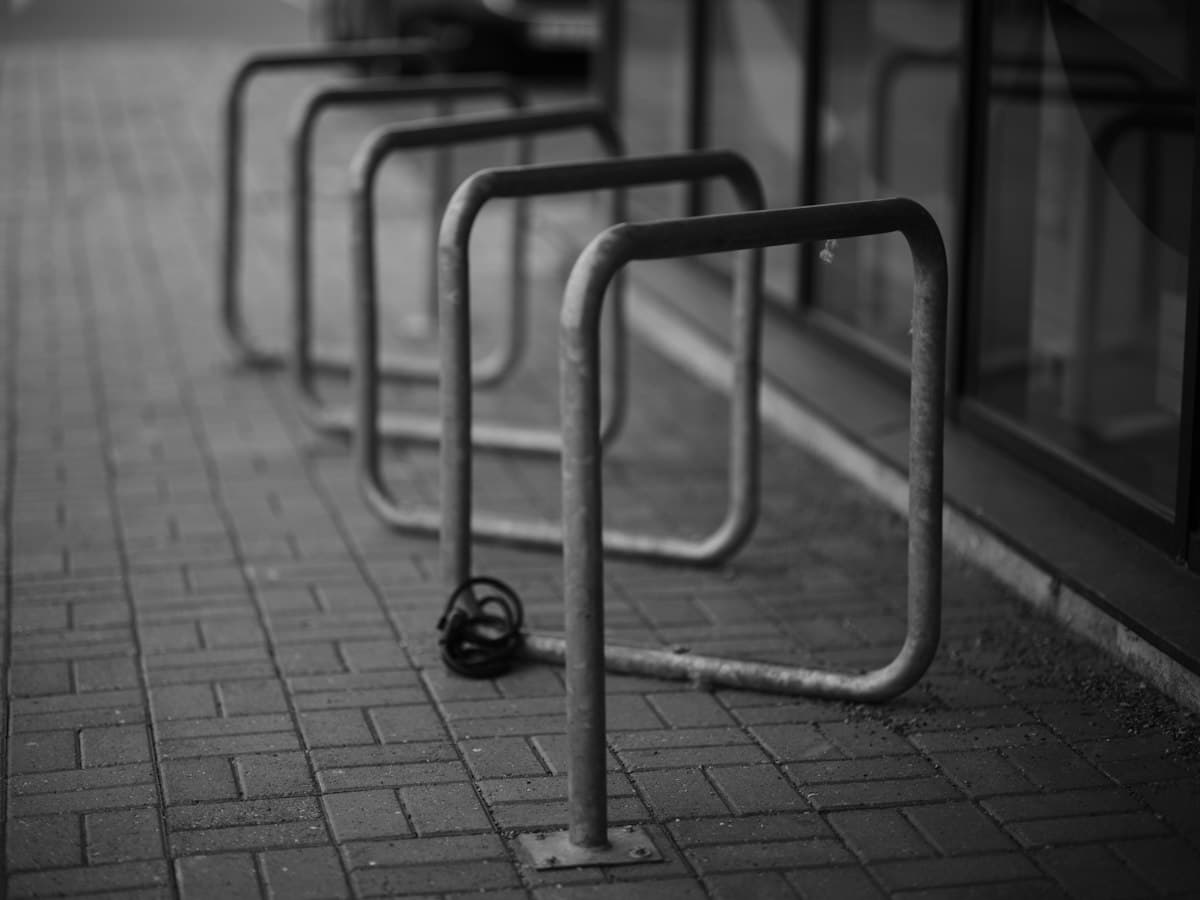
Fixed racks. Racks bolted to the floor or wall give everyone something to lock the frame to. Loose, freestanding racks can be carried off with the bikes still in them.
Light and a working door. Motion-sensor lighting and a door that closes and latches by itself are cheap compared with one stolen e-bike.
A regular bike clean-up. Abandoned bikes fill the racks, so the bikes people still use end up leaning loose against the walls. The Finnish Cyclists' Federation's guide on abandoned bikes in housing companies, prepared with the National Police Board and the property management and real estate associations, recommends a clean-up every year or two. It gives owners at least a month to remove a tag from their bike, then at least another two months before anything is disposed of. Bikes that look stolen go to the police, not to the dump.
If bikes disappear from your building
Report the theft to the police and to your insurer, and tell the board or the property manager straight away so your neighbours check their own bikes. A theft that one resident notices is often only one of several.
The police report needs the bicycle serial number, the one stamped on the frame. "For the police report you need the bike's frame number and model," says Mysafety's Abgottspon. Without it, a recovered bike can't be matched to you. Our step-by-step guide covers what to do when your bike is stolen.
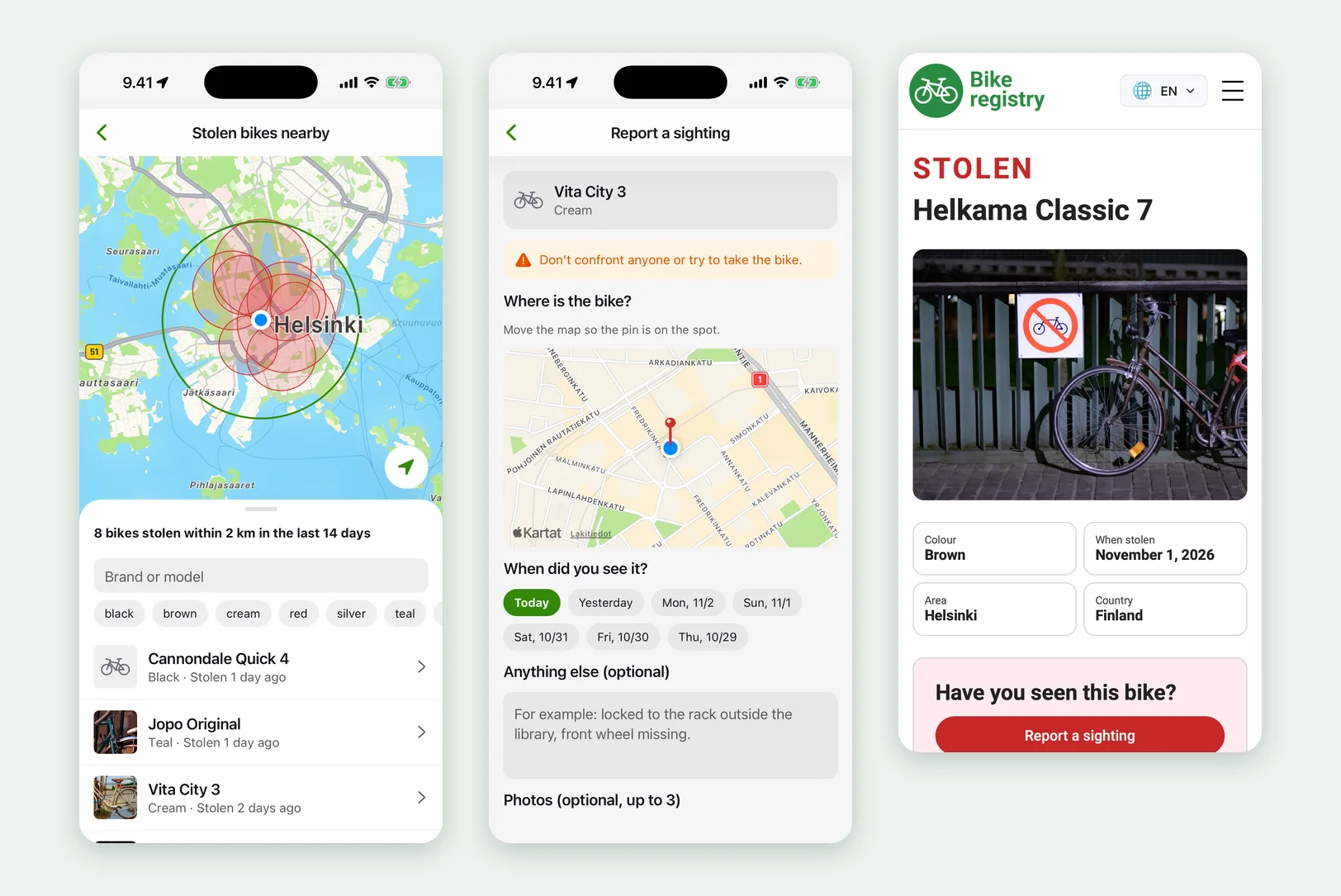
Expect the police to prioritise. In 2024 the national clearance rate for property crime in Finland was 37.4%, and a bike taken from a basement weeks ago is rarely at the top of the list. That makes your own records matter more. A bike registered in Bike Registry already has its serial number, photos and description on file. When you mark it stolen, other users can see it under stolen bikes nearby and send you a sighting, and you can share a poster of the bike with neighbours and local groups.
The cheapest moment to do this is before anything happens. Bike registration takes about five minutes per bike, and it covers the whole household, including the old bike that has been in the basement since summer.