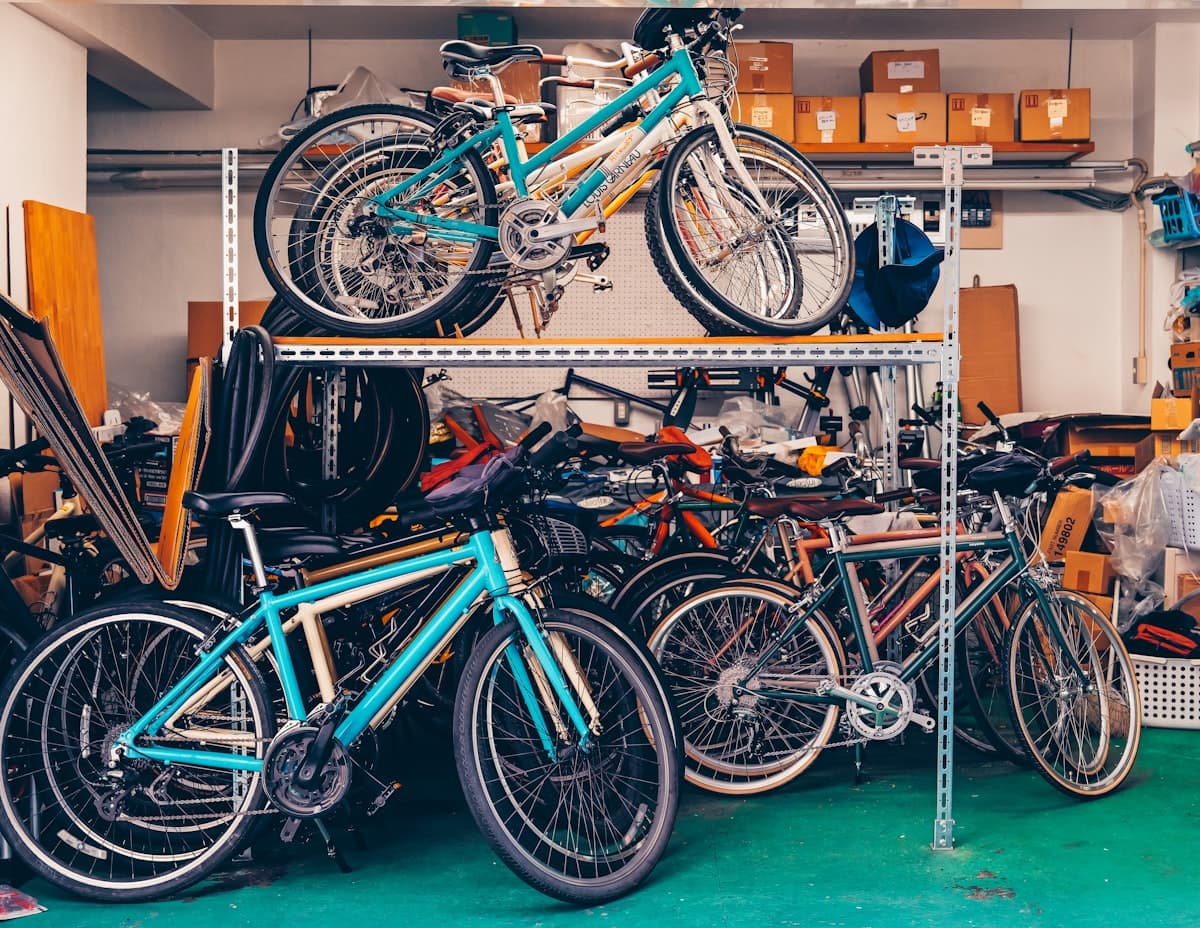
Estonia's used e-bike market is one of the hottest corners of the country's classifieds. Google Trends shows searches for Ampler up around 80% month on month, and "elektriratas" has gone breakout. A well-kept 2–3 year-old e-bike sits in the EUR 1,000–2,500 range — real bargains exist, but so does enough money on the table to make scams worthwhile.
This guide is for buyers in Estonia: how to read listings on Osta.ee, Soov.ee, Okidoki, and Facebook Marketplace, what to verify on an Ampler, how to assess the battery without diagnostic tools, and the local red flags that signal a stolen bike. For the general checklist, see our used e-bike buying guide.
Where to look in Estonia
Osta.ee and Soov.ee are the main Estonian classifieds — mostly private sellers, variable quality, decent price filters. Okidoki.ee leans more commercial, so you'll find refurbished bikes from dealers. and groups like "Jalgrataste ost ja müük Eestis" move faster, but most scams show up there first.
Facebook Marketplace
The brand mix is distinctive. Tallinn-born Ampler Bikes (founded 2014) is heavily represented — Nova, Nova Pro, and Curt dominate the secondary market. You'll also see plenty of Cube, Trek, Specialized, Decathlon Riverside, and around Tartu a surprising number of Surron electric off-road bikes. Premium brands hold value best, which is part of why Ampler dominates resale here.
Tallinn is the biggest market, but Tartu and Pärnu matter too. Tartu skews student-budget with a smaller but growing e-bike share. Pärnu floods the market every summer.
Battery and motor — half the bike's value
The battery is by far the most expensive single component on an e-bike. If it's near end of life, you've effectively negotiated EUR 500–800 off the agreed price — because that's what a replacement costs.
Check these before you buy:
Battery age. Lithium-ion packs typically last 500–800 full charge cycles before capacity drops to 70–80%. A two-year-old daily commuter may already be at 600 cycles. Ask for the manufacturing date — stamped on the casing or printed inside.
Cycle count. Bosch, Shimano, and Mahle systems expose this through a service tool or the official app. Ask the seller for a screenshot, or meet at a shop that can check.
Real range on a test ride. Have the seller charge fully before the meeting. A healthy two-year-old pack delivers 70–80% of factory-spec range. If a Curt rated for 70 km gives you 35 km, the battery is finished.
Motor noise and torque. Bosch and Mahle mid-drives should assist smoothly, without grinding or whining. A short climb (toward Toompea, say) reveals a weak motor instantly.
Estonia has authorized Bosch service points in Tallinn (Hawaii Express and several specialist shops) that run diagnostics and replace batteries. For Amplers specifically, the best stop is Ampler's own showroom at Türi 10d, Tallinn (Mon–Fri 8:30–16:30, Sat–Sun 10:00–16:00). Experienced buyers arrange for the seller to bring the bike there for a pre-purchase inspection.
Ampler-specific checks
Ampler bikes carry a serial number stamped on the frame (under the down tube near the bottom bracket), and every bike is registered in Ampler's own system. That makes verification easier than with most brands.
Before money changes hands:
Have the seller initiate an Ampler account transfer. Through Ampler's support portal (support.amplerbikes.com), the seller moves the bike from their account to yours. An honest seller does it without delay.
Ask for the original receipt. Nova starts at EUR 2,990, Nova Pro at EUR 3,490, Curt at EUR 3,690 — nobody throws a receipt away at those prices.
Note the battery serial. Ampler integrates batteries into the frame; each controller carries its own number. Photograph it and ask Ampler support whether it's registered to the same bike before you pay.
Confirm the model year. Ampler has revised motors and frames over time. A 2022 Nova and a 2024 Nova are not the same bike.
If the seller refuses the Ampler account transfer, there's no good reason. Walk away.
Verify ownership before you pay
Beyond Ampler's system, use a general bicycle serial number check for any e-bike. A 30-second lookup against a stolen bike registry is the cheapest bike theft prevention step on the planet:
Search the frame number against Bike Registry — free, covers stolen-bike reports across the Nordic and Baltic region. This is bike theft prevention in its simplest form.
Cross-check on Bike Index, an international database many Estonian owners also use.
If the bike is already registered on Bike Registry, ask the seller to initiate an ownership transfer in the app. That creates a clean chain of custody — the seller starts the transfer, a 24-hour confirmation code appears in your app, and once you both confirm the bike is officially yours.
Estonia-specific red flags
Most sellers are honest. But these patterns keep surfacing in Estonia and they're worth knowing:
"Battery is fine but the charger is missing." An original Ampler or Bosch charger costs EUR 80–150. Honest owners don't lose them. Classic "the bike came charger-less because it was stolen" tell.
Refusal to meet at home. If the seller lives in Mustamäe or Annelinn but insists on meeting at a Lasnamäe parking lot or random city-center street, ask why. Honest sellers invite you to their stairwell or yard.
Photos in anonymous locations. Stairwell, basement, blank wall, dim garage. If there's no photo of the bike in actual use (balcony, yard, mid-ride), ask for one — honest sellers send them within five minutes.
Price 40%+ below market. A two-year-old Curt at EUR 1,500 when comparable bikes sit at EUR 2,800 on Osta.ee. Sometimes a real quick move — more often stolen goods turning into cash fast.
Cash-only, hurry, no paperwork. Estonia has a large Russian-speaking community and most sellers are honest — language alone means nothing. But cash-only, "let's meet tonight," no documentation plus an attractive price is the pattern police recognize as laundering. If a seller refuses bank transfer or card on a EUR 2,000 bike, walk away.
The Estonian Police and Border Guard Board (politsei.ee property crime guidance) repeatedly stresses that the buyer must be able to prove ownership — meaning if the bike later turns up in the police database as stolen, nothing protects you except a receipt and a written sale contract.
Closing the deal safely
You've checked the battery, cleared the serial number, the price feels reasonable. To finish properly:
Meet in daylight, in public. In Tallinn, Solaris or Stockmann parking lots work well; in Tartu, the Lõunakeskus forecourt. Police station car parks are fine too.
Write a simple sale contract. Make, model, frame size, frame number, price, date, both parties' ID codes. Both sign, photograph with your phone. Estonian civil law doesn't require a notary, but that paper is your strongest defense later.
Pay by bank transfer or Mobile-ID. A transfer leaves a trace you can hand the police. Cash works, but it's worse.
Transfer ownership on the spot. If the bike is on Bike Registry, do it right there — the seller generates a code, you enter it in your account, done in two minutes.
Run the bicycle serial number through Bike Registry for free before you pay. Ten seconds of checking can save EUR 2,000 and a long conversation with the police. Once the deal is done, finish with bike registration in your own name — it's the cleanest defence against future bike theft.
Ready to protect your bike? Download the app and register your bike for free.