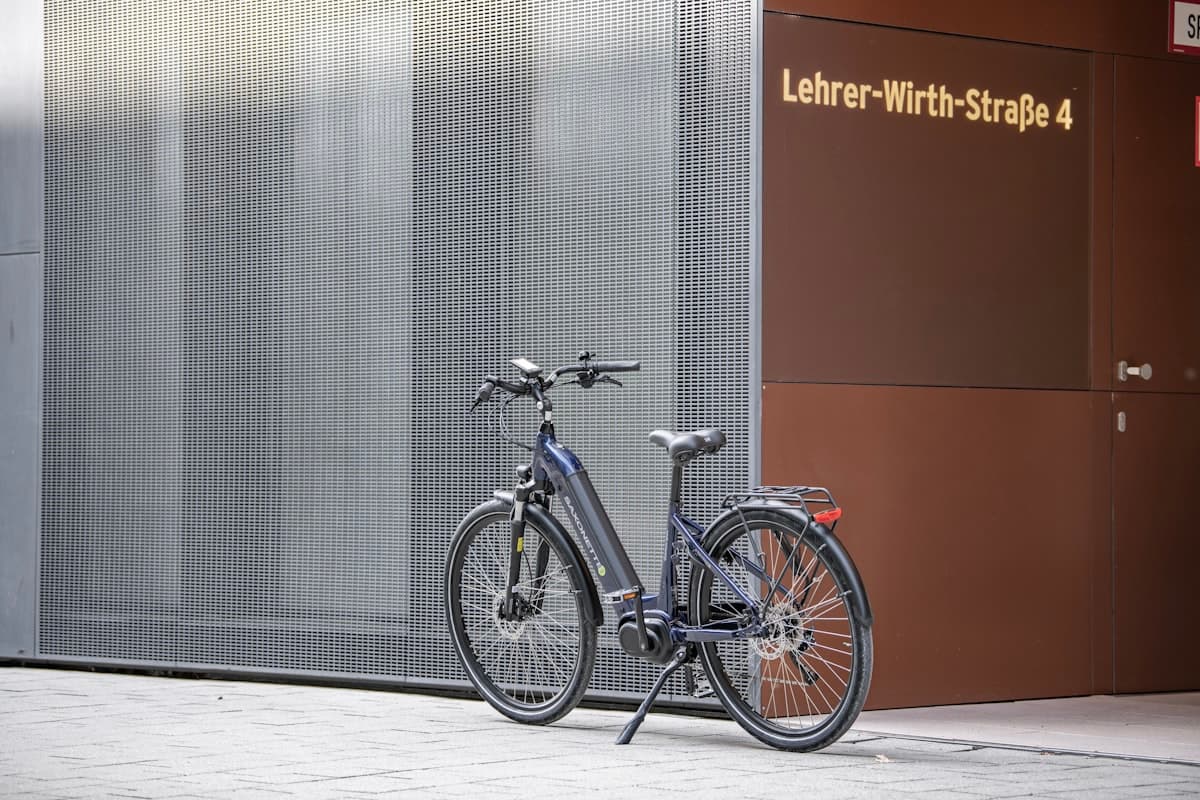
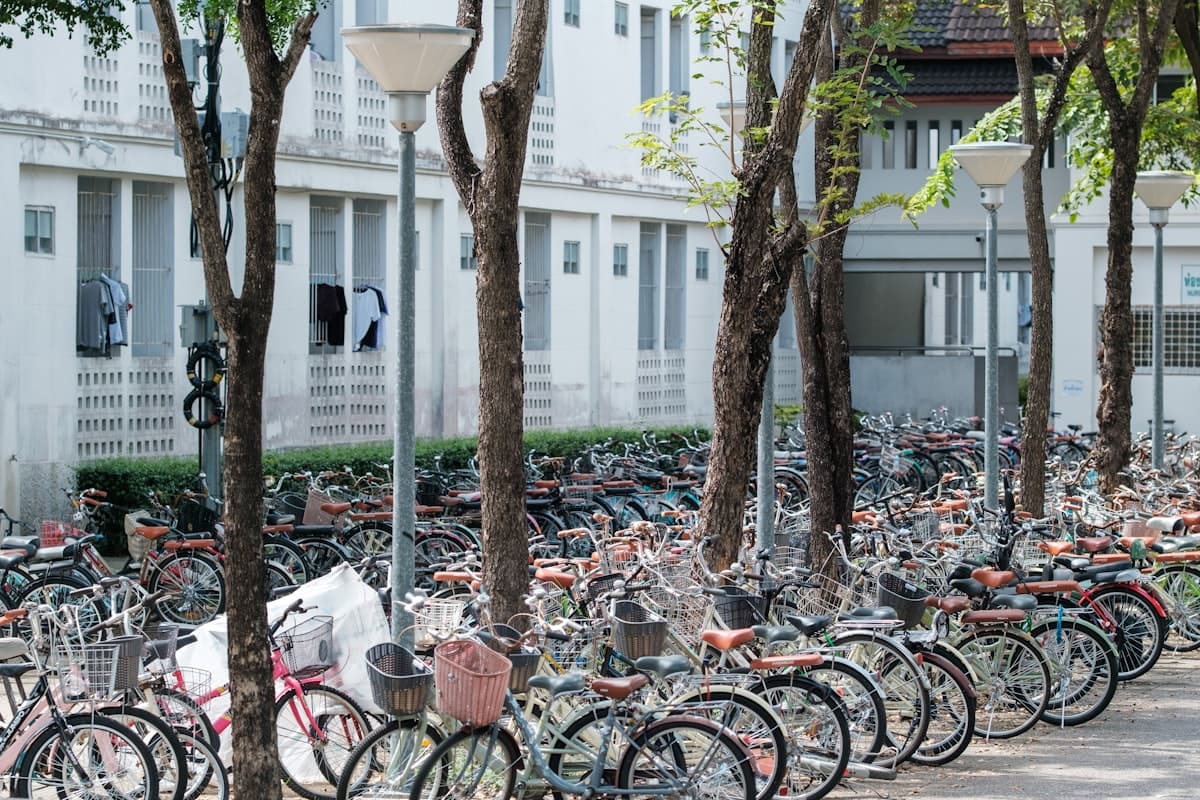
A EUR 3,000 e-bike locked outside a grocery store with a EUR 20 cable lock. That's the security mismatch playing out on bike racks across the Nordics every single day. E-bikes are roughly three times more likely to be stolen than regular bicycles, yet most owners protect them with the same gear they used on a EUR 400 city bike ten years ago.
In Sweden, e-bikes already account for over a quarter of all reported bike thefts — 14,675 out of 54,844 in 2024. Finland saw a 113% increase in e-bike sales between 2021 and 2022, and the theft numbers are following. As autumn commuting season ramps up and e-bikes spend more hours locked outside offices, train stations, and apartment buildings, the gap between what your bike is worth and how well you've protected it matters more than ever.
This guide covers the full picture: locks rated for high-value bikes, insurance that actually pays out, GPS tracking that works, and registration that gives police something to work with.
Why e-bikes demand stronger security
The economics of e-bike theft are straightforward. A stolen e-bike fetches more money, sells faster, and offers more ways to profit than a regular bicycle. According to a UK survey of convicted bike thieves, two-thirds of stolen bikes are sold within hours, and 78% were stolen to fill specific buyer orders. E-bikes sit at the top of that wish list.
Beyond the complete bike, individual components carry serious resale value. A replacement battery costs EUR 300 to EUR 800. Motors, displays, and controllers each have their own market. A thief who strips an e-bike in a garage can sell parts separately, making recovery nearly impossible and multiplying the damage.
Over half of e-bike thefts happen in residential areas — garages, apartment bike rooms, and garden sheds. Thieves know e-bike owners bring their bikes closer to home, so they target those locations at night when nobody is watching.
Lock recommendations: Diamond and ART 3+ rated
Standard bike lock advice falls short for e-bikes. When you're protecting a bike worth EUR 2,000 or more, the lock budget should reflect that — most security experts recommend spending 10-15% of your bike's value on locking hardware.
What the ratings mean:
Sold Secure Diamond is the highest rating from the UK-based Sold Secure testing organization. Locks at this level withstand sustained attack with power tools for several minutes. This is the minimum recommended rating for e-bikes.
ART 3 and above is the Dutch equivalent, widely used across continental Europe. ART 3 is considered the entry point for e-bike security; ART 4 and ART 5 offer progressively higher resistance. Many Dutch and Nordic insurers specifically require ART 3+ locks for e-bike coverage.
Practical setup for an e-bike:
Use two locks, not one. A Diamond/ART 3+ U-lock through the frame and rear wheel, plus a heavy chain or second U-lock through the front wheel and the rack. This forces a thief to defeat two separate locking mechanisms — doubling their time, noise, and exposure.
For home storage, bolt a ground anchor or wall anchor into concrete and run a heavy chain through the frame. This matters because residential theft is the most common scenario for e-bikes. A EUR 50-100 anchor setup protects against the highest-risk situation your bike faces.
Battery and motor security
The battery is the most vulnerable component on your e-bike. It's removable by design, often secured by a basic barrel lock that came with the bike.
Remove your battery when parking in public. Yes, it weighs 2-4 kg and it's awkward to carry. But it eliminates the most attractive component for a thief and makes the remaining bike far less appealing to steal. Many thieves will walk past a battery-less e-bike entirely.
Upgrade your battery lock. Factory-installed battery locks are often generic — dozens of bikes ship with identical keys. Aftermarket battery locks with unique keying or Bluetooth access add a real barrier. At minimum, confirm that your battery cannot be removed with a standard Allen key or a flat-head screwdriver.
Secure your motor. Mid-drive motors are bolted to the frame and difficult to remove quickly, which is good. Hub motors are more exposed but still require tools and time. The motor's serial number is your main line of defense here — if a stolen motor surfaces in a repair shop or online listing, that serial number is how it gets traced back to you.
Insurance requirements for e-bikes
In Finland and Sweden, standard pedal-assist e-bikes (up to 250W, 25 km/h cutoff) are covered under home insurance — no separate motor vehicle policy needed. But coverage comes with conditions that e-bike owners trip over constantly.
Lock requirements are stricter for high-value bikes. Swedish insurers like Folksam require SSF-approved locks. Using an unapproved lock can cut your payout to 50% of the bike's value. Finnish insurers similarly require that the bike be locked to a fixed structure or stored in a locked space.
Coverage caps may not reach your bike's value. Finnish home insurance typically covers bicycles up to around EUR 5,000, but Swedish coverage varies between SEK 40,000 and SEK 50,000 depending on your provider and tier. If your e-bike exceeds these limits, you need supplementary coverage.
ART and Sold Secure ratings directly affect claims. Many dedicated bicycle insurance providers — Qover, Solid Insurance, and others — require that your lock carry a minimum ART 3 or Sold Secure Gold rating to qualify for full coverage. Some offer lower premiums if you use a Diamond/ART 4+ lock. Check your policy before you buy a lock, not after you file a claim.
Depreciation applies. Finnish insurers typically apply 9% annual depreciation on bicycles, with a floor around 28% of new equivalent value. A three-year-old e-bike bought for EUR 3,000 might only be valued at EUR 2,190 before the deductible is subtracted. Keep your purchase receipt and registration records — they're your evidence of original value.
In Finland, insurance companies pay out EUR 11 million per year on bicycle theft claims according to Finanssiala ry. A large and growing share of those claims involve e-bikes.
GPS tracking for e-bikes
GPS trackers have become a practical layer of e-bike security, not a gimmick. The technology has matured enough that hidden trackers are small, battery-efficient, and genuinely useful for recovery.
Dedicated bike GPS trackers (Invoxia, Tracmo, BikeTrax by PowUnity) fit inside the frame tube or integrate with the e-bike's own battery for power. They provide real-time location tracking via a companion app and can send movement alerts when the bike is disturbed. Subscription costs typically run EUR 3-5 per month.
Apple AirTags and Samsung SmartTags are a budget option. Slip one inside the seat tube, behind the headset cap, or inside a saddlebag. They rely on the Find My / SmartThings network rather than GPS, so accuracy depends on nearby devices — good in cities, weaker in rural areas. At EUR 30-35 with no subscription, they're worth adding even if you have a dedicated tracker.
Integrated tracking is built into some newer e-bike systems. Bosch, Shimano, and a handful of manufacturers offer companion apps with location features. If your e-bike has this capability, activate it and make sure you've tested it.
GPS tracking works best as a complement to strong locks and bike registration — not a replacement. A tracker helps you find your bike after a theft, but a good lock and proper registration reduce the chance of theft in the first place.
Registration: frame, motor, and battery serial numbers
Here's where e-bike owners have an advantage that most don't use. A regular bike has one serial number. Your e-bike has at least three: frame, motor, and battery. Each one is a separate traceable identifier — and each one can surface in a different place if your bike is stolen and stripped.
On Bike Registry, you register your bicycle's frame serial number along with photos and details. You can note your motor serial number and battery serial number in the bike's description field, creating a complete record of all identifiers in one place. If your bike is stolen, you flag it — and if a buyer checks the serial number before purchasing second-hand, the theft flag appears.
Where to find your serial numbers:
Frame: stamped on the bottom bracket shell (underside of the frame where the pedal cranks meet). Sometimes on the head tube or rear dropout.
Motor: printed on a label or stamped into the motor housing. For mid-drive motors, check the bottom or side of the motor unit. For hub motors, look at the hub shell.
Battery: printed on a label on the battery casing, often visible when the battery is removed from the frame.
Photograph each serial number as you find it. Store those photos alongside your registration. If your bike is stripped, a recovered motor or battery can be linked back to you — but only if those numbers exist in a record somewhere.
Research shows that registered bikes have better recovery prospects. A North American study found a 15% recovery rate when theft was reported through multiple channels, compared to roughly 5% for unregistered bikes. For e-bikes specifically, where stripping is common and recovery rates sit even lower, having all three serial numbers documented is the difference between a traceable bike and one that vanishes into the parts market.
Ready to protect your bike? Download the app and register your bike for free.