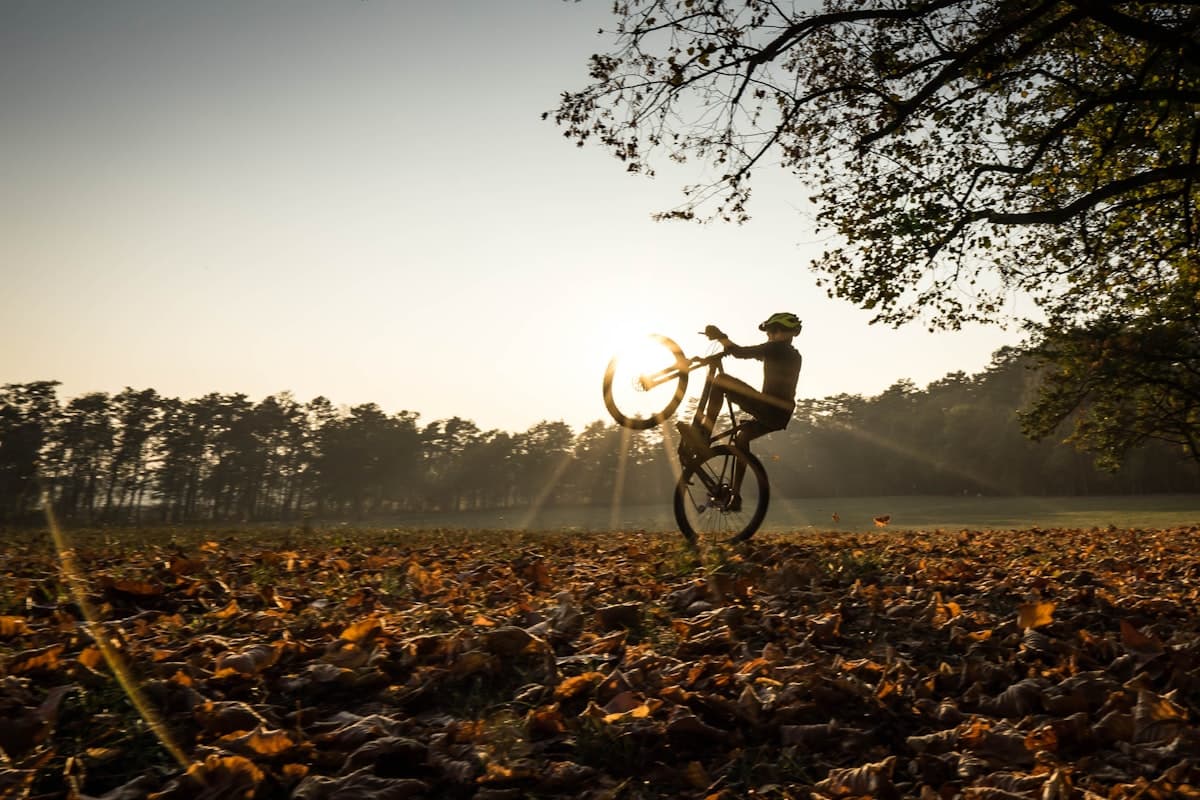
Studded bike tyres are worth fitting if your riding includes ice that comes and goes: refrozen slush, glazed bike paths after a thaw, untreated side streets. On a well-ploughed, compacted snow route they matter less, and in deep snow they barely help at all. Pair them with real lights, because a Nordic December gives you about six hours of daylight, and you have most of what winter cycling needs.
Here is how to decide, what to buy and how to set it up.
When studded tyres are worth it
In Finland, the slippery season runs from October to April, according to the road safety council Liikenneturva. That is seven months. The same page says a cyclist's typical accident is not a collision but a fall, usually on a slippery or uneven surface. Around 25 cyclists die and 620 are injured on Finnish roads each year in the official statistics.
Swedish hospital data points the same way. A VTI study of cyclists treated in emergency departments found that , with no other road user involved. Ice was the most common cause among the crashes linked to road maintenance. The data covers 2007 to 2011, so read it as a pattern rather than a current count.
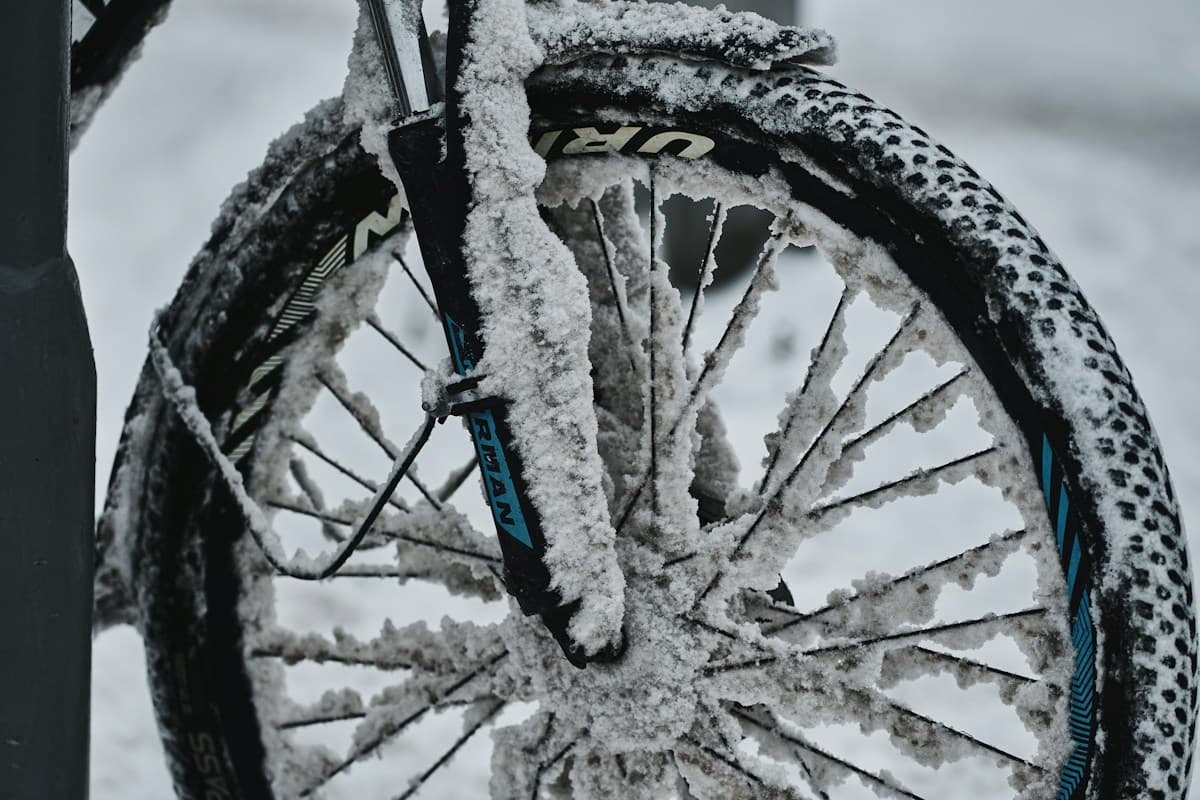
Fit studs if you ride before the ploughs and gritters have been out, cross untreated surfaces, or live somewhere that freezes and thaws repeatedly. Liikenneturva recommends studs on at least the front tyre.
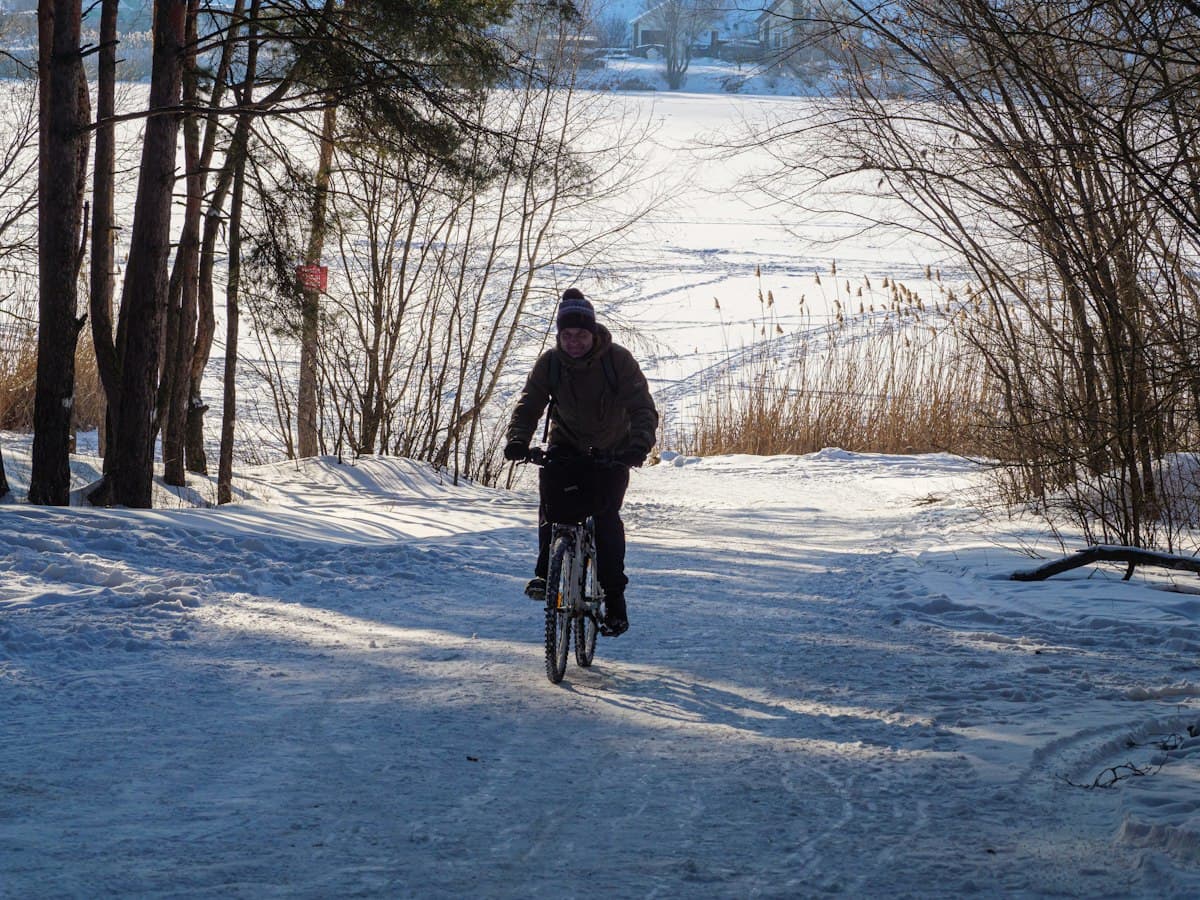
You may not need them if your commute is a well-maintained main route with packed snow. That is the lesson from Oulu, where most winter cyclists ride without studs on cycleways built for it.
They won't save you in deep, fresh snow. Schwalbe's own FAQ says it plainly: in deep snow, spiked tyres don't help either.
How many studs, and where
Bicycle studded tyres typically carry between 100 and 400 studs. At the top end, Schwalbe's Ice Spiker Pro has up to 402. More studs mean more grip on sheet ice, and also more weight, more rolling resistance and a louder ride on bare asphalt.
A few rules of thumb:
Commuting on mixed surfaces: a tyre with two rows of studs, roughly 100 to 200, is a sensible middle ground.
Ice-heavy routes, trails or rutted side streets: four rows, 200 or more.
Milder winters around zero degrees: the winter cycling guide from the Cycle4Climate project, run by Espoo and partners across the Central Baltic region, says half-studded tyres suit those conditions, while fully studded tyres are best for a Finnish winter.
On a budget: stud the front first. A front wheel that slides takes you down, while a rear wheel that slips can usually be caught.
Fitting, running in and pressure
New studs need to seat in the rubber before they meet ice. Schwalbe advises running new tyres in for about 40 km on asphalt, without hard acceleration or braking. The Cycle4Climate guide is more cautious and says to avoid sudden braking for the first 100 km. Either way, fit them a week or two before you need them, not on the morning of the first ice.
Pressure works differently in winter. Schwalbe says that lowering the air pressure gives more grip, and that studded tyres grip best near the minimum pressure printed on the sidewall. Never go below that minimum, or you risk pinch flats and a tyre rolling off the rim. On days of mostly bare tarmac, a little more air cuts the noise.
If your bike has an electric motor, start gently on ice. Bosch advises setting off without motor assistance on slippery ground, and above all not in Turbo mode, because the rear wheel will simply spin. Cold also reduces battery capacity and range. Below zero, Bosch suggests keeping the battery indoors at room temperature and putting it back on just before you ride.
The law in both countries is clear about the basics:
Finland: a white or light-yellow front light and a red rear light when riding in the dark or at dusk, plus front, rear and side reflectors, per Liikenneturva. A helmet or head lamp counts as a front light.
Sweden: a white or yellow front light and a red rear light visible from 300 metres, plus reflectors. Riding in the dark without lights can cost you a 500 kronor fine, according to the Swedish Police.
Beyond the legal minimum, a few things make the biggest difference: a rechargeable front light bright enough to show the surface, not just to be seen; a second rear light; reflective details on moving parts like ankles and pedals; mudguards, which in slush matter more than any jacket; and gloves you can still brake in. Wear layers you can open up, because you will be warmer after ten minutes than you are at the door. Our autumn cycling checklist covers lights in more depth.
The winter bike is a bike too
Schwalbe's practical tip is that the ideal setup is studs on a second bike, so you can pick the bike to suit the weather each morning. Plenty of Nordic households already do this with an older bike that gets demoted to winter duty. It is the bike nobody photographs and nobody registers, until it disappears from the rack at the station.
Winter cycling is not a fringe habit. A Liikenneturva survey of 1,073 Finns in March 2023 found that about one in three cyclists had ridden through the previous winter, and 78% of them felt it was safe. Among those who stopped for the winter, 54% gave feeling unsafe as the reason.
"You can't influence the winter weather or road conditions yourself, but you can prepare for them."
Part of preparing is making sure the winter bike exists on paper. A set of studded tyres can cost more than the second-hand bike they are fitted to, and bike theft does not stop for winter. If the bike is stolen, its bicycle serial number is what lets the police connect it back to you. Bike registration takes five minutes: register it like your summer bike, and add the tyres, lights and any other upgrades to the description so the record matches what is actually on the street.